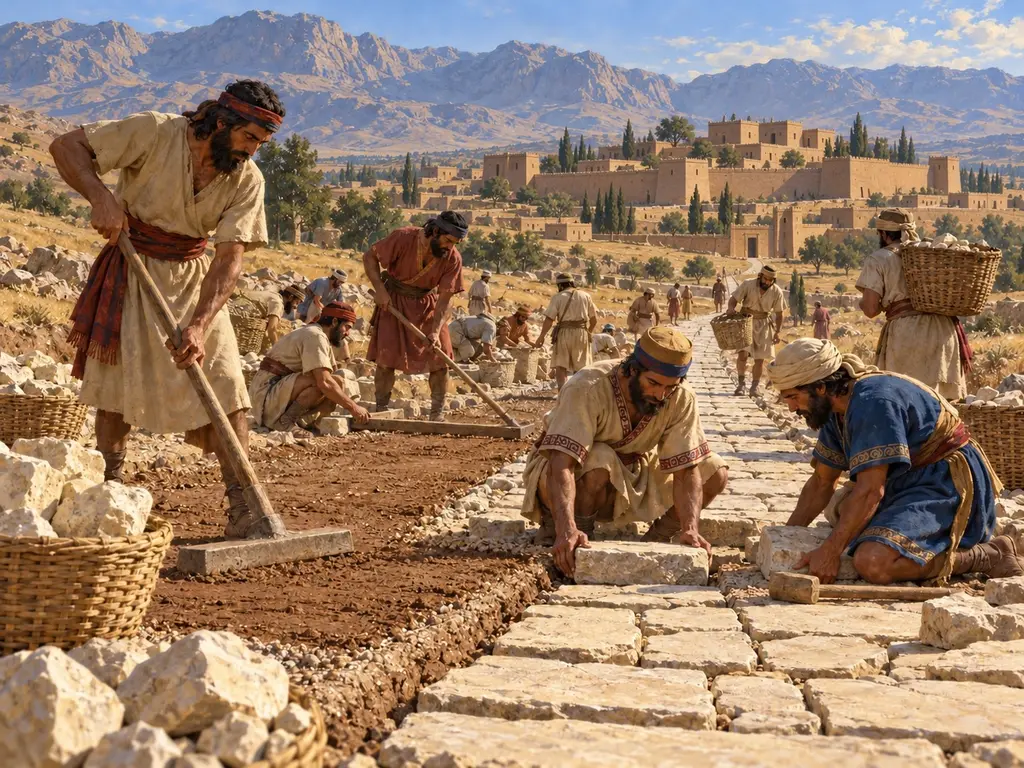
Road works
Royal upkeep of roads and way stations across the empire, about 520-479 BCE
Road works stands for the King's upkeep of the roads and way stations that tied his empire together. Under Darius, routes linking Persepolis and Susa with Sardis, Egypt and India carried officials, couriers, troops and supplies, fed from royal stores at stations along the way. Greek writers admired the system, and the Persepolis tablets show how it was run from day to day.
In the game: A standing order on the Ledger's Taxes page: it costs silver each month and caravans carry more per visit. This simplifies history, since the King's stations issued rations to authorised official travellers, not to merchant caravans.
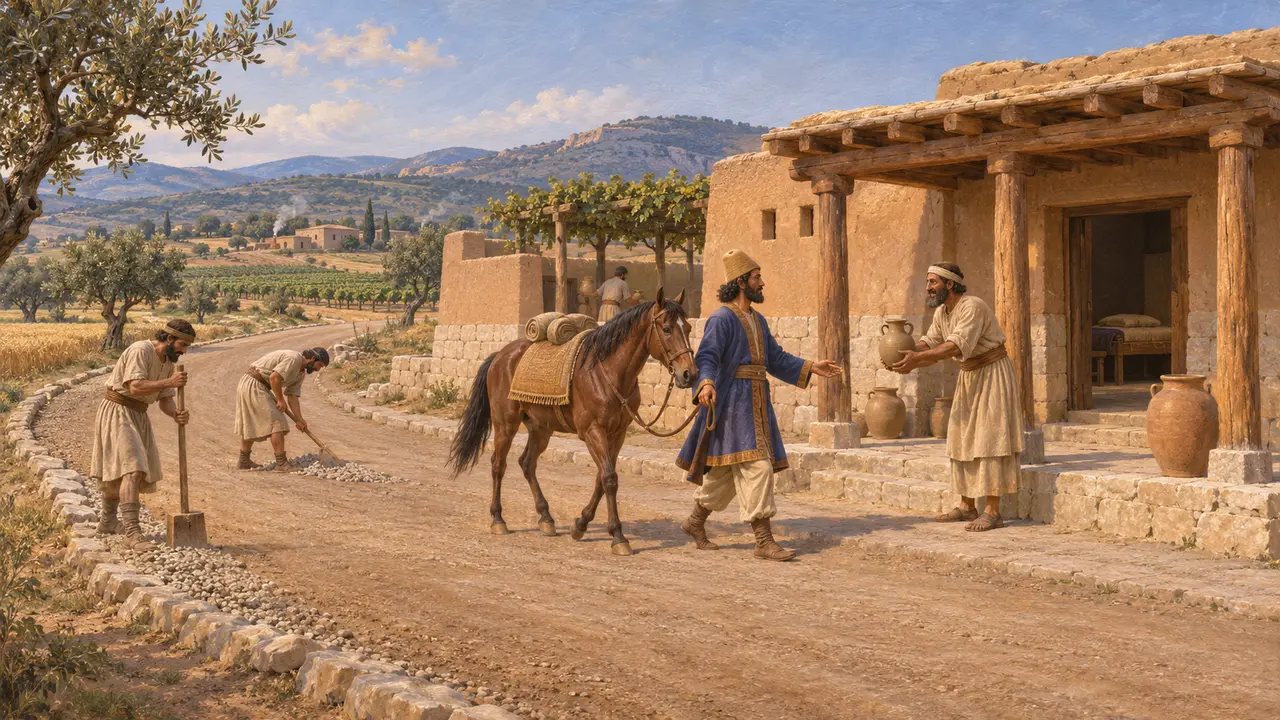
Herodotus on the road from Sardis to Susa
Ancient accountHerodotus describes the road from Sardis to Susa as running through settled and safe country, with royal stations and good lodgings along its whole length. He counts 111 stations over 450 parasangs and reckons the journey at 90 days for a traveller covering 150 stades a day. He adds three more days from Ephesus to Sardis. His totals are his own reckoning and probably rest on informants rather than measurement.
Herodotus 5.52-54
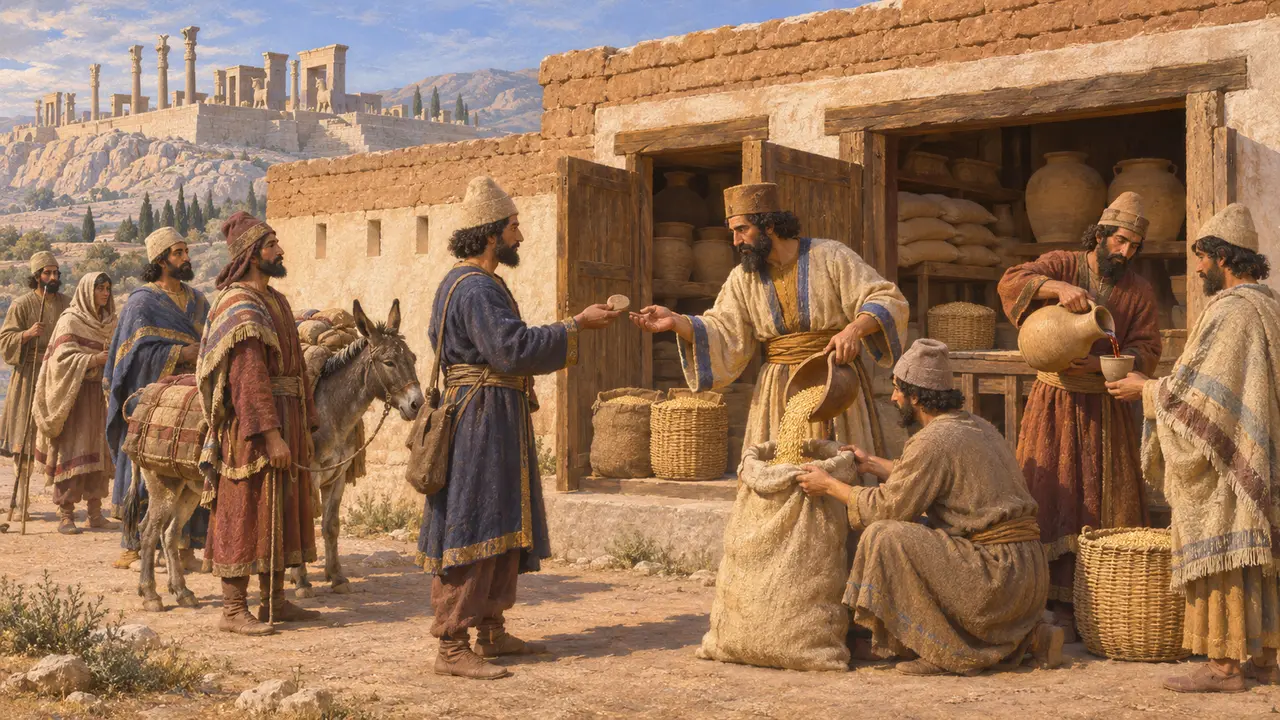
Stations and rations in the tablets
In the recordThe Persepolis Fortification tablets, written between about 509 and 493, record grain, flour, beer and wine issued to travellers on roads linking Persepolis and Susa with Sardis, Arachosia, India and other provinces. Parties carried a sealed authorisation from the King, a satrap or another high official, and were often led by a guide. The tablets show the stations as depots stocked by the royal economy rather than as private inns.
R. T. Hallock, Persepolis Fortification Tablets, 1969
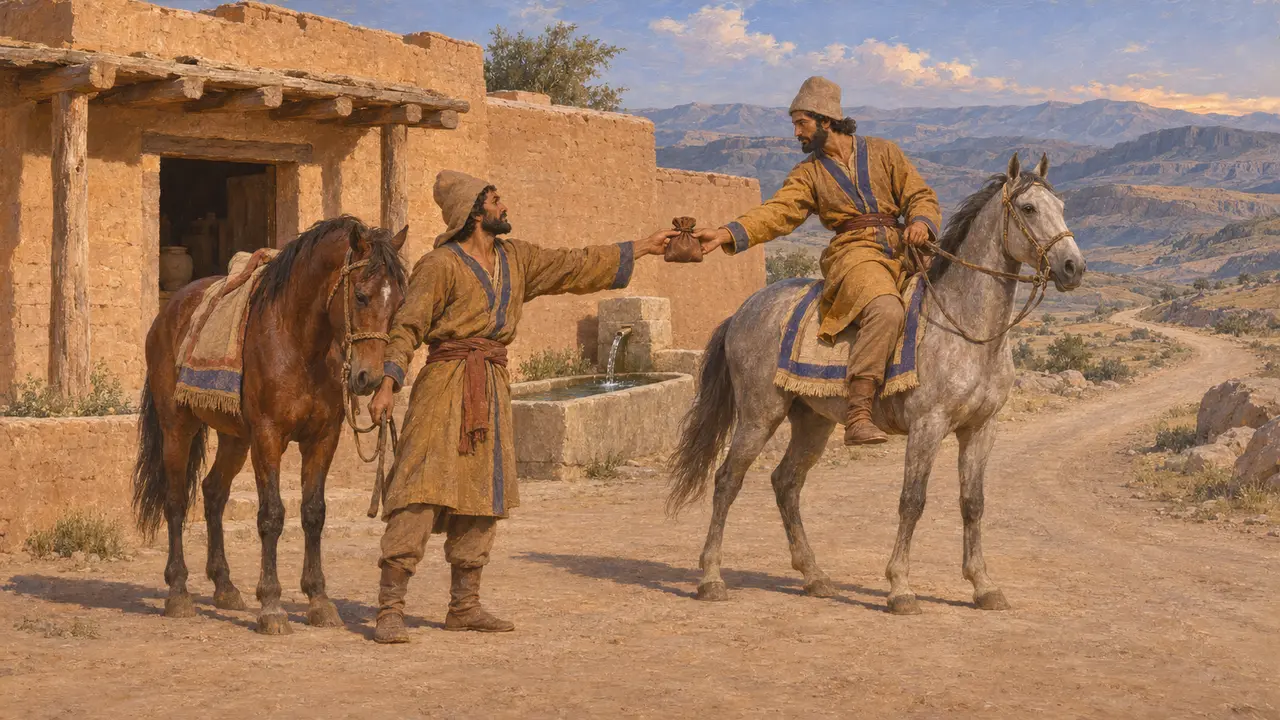
Relays of royal couriers
Ancient accountHerodotus tells how news of the defeat at Salamis was carried to Persia by relays of riders, with a fresh man and horse posted for each day's stage. He compares the handover of the message to a Greek torch race and gives the Persian name of the system as angareion. He says nothing mortal travelled faster, and that neither weather nor darkness stopped the riders.
Herodotus 8.98
What the roads were like
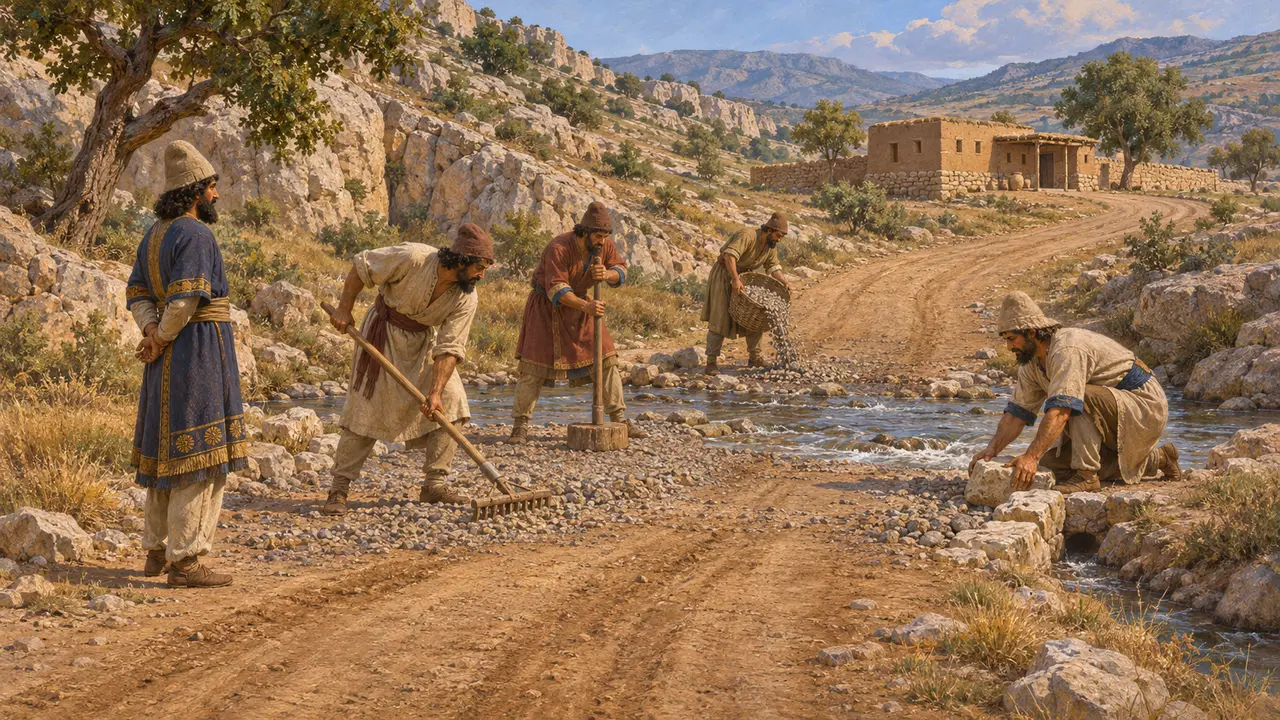
DisputedHistorians debate how much the Persians built and how much they inherited from Assyrian, Elamite and Lydian routes. Most roads were probably unpaved tracks, improved at passes, fords and river crossings and marked by stations. The line of Herodotus's road across Anatolia, whether north by the Halys or south through the Cilician Gates, is still argued, and few stations have been securely identified on the ground.
D. Graf, The Persian Royal Road System, 1994; P. Briant, From Cyrus to Alexander, 2002
Cyrus and the first posts
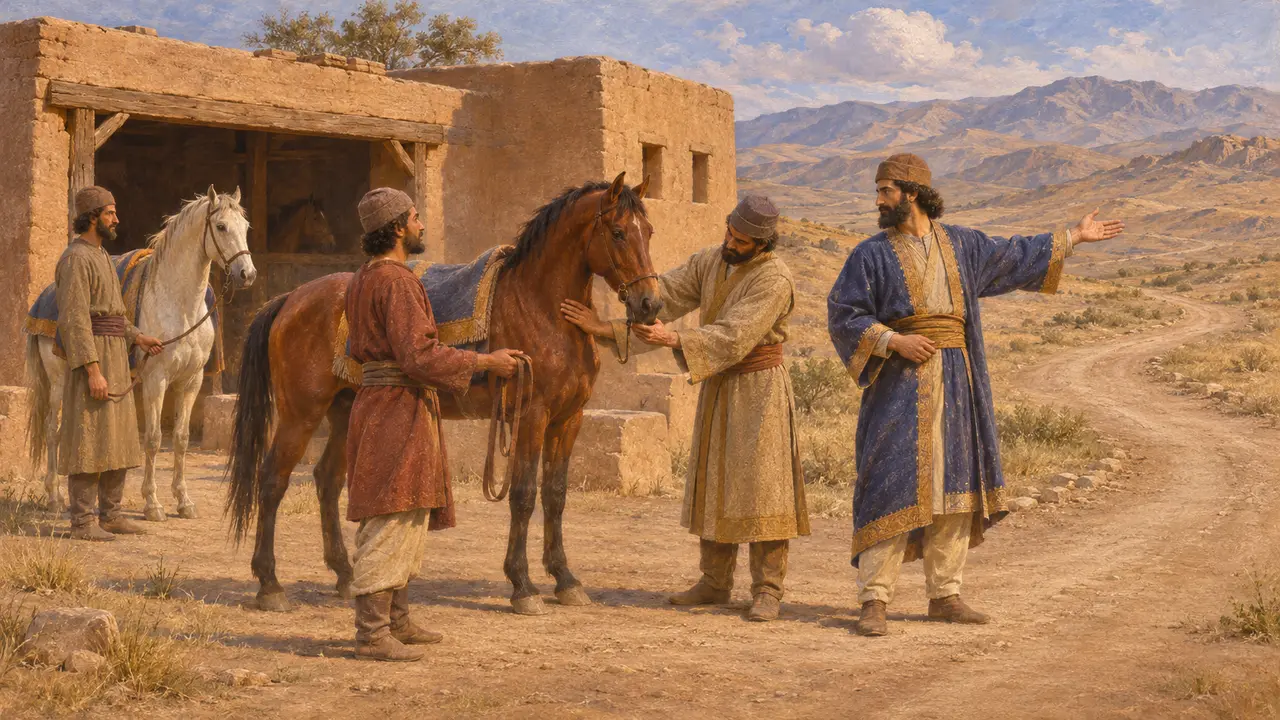
Later legendXenophon credits Cyrus the Great with founding the relay posts after measuring how far a horse could travel in a day without being worn out. He wrote more than a century after Cyrus, in a work shaped as a portrait of the ideal ruler, so the story is better read as praise than as a record of who began the system.
Xenophon, Cyropaedia 8.6.17-18
Sources
- Herodotus 5.52-54
- R. T. Hallock, Persepolis Fortification Tablets, 1969
- Herodotus 8.98
- P. Briant, From Cyrus to Alexander, 2002
- D. Graf, The Persian Royal Road System, 1994
- Xenophon, Cyropaedia 8.6.17-18