Encyclopedia › Battles and events
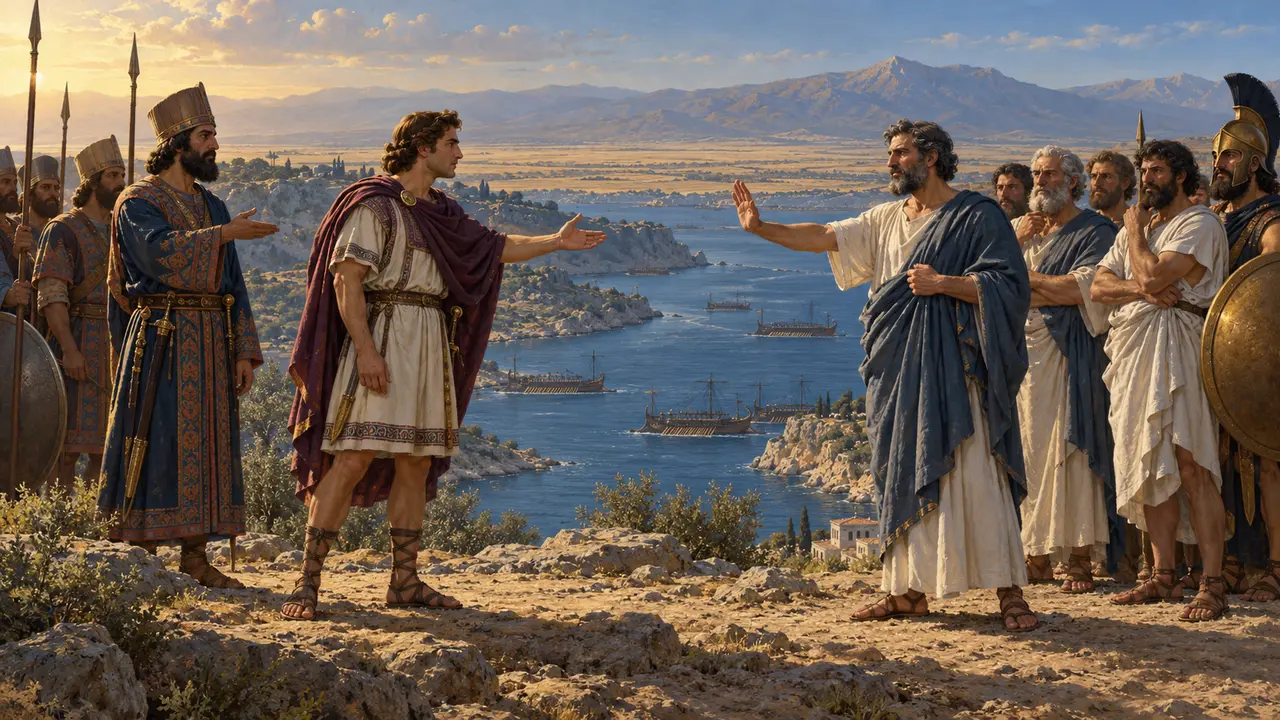
Alexander of Macedon's embassy to Athens
A Persian peace offer carried to Athens by the king of Macedon, 479 BCE
In the game: Level 11: The Finale
After Salamis, Mardonius wintered in Thessaly and tried to win Athens over before the next campaign, sending Alexander I of Macedon, a Persian vassal with ties to Athens, to offer the King's friendship and generous terms. The Athenians refused, and Herodotus made their answer a statement of what bound the Greeks together. The refusal kept the Athenian fleet on the Greek side, and the war was decided by battle at Plataea.
In the game: The game shows this as a 479 event in which Mardonius sends Alexander to Athens to offer the King's friendship and the Athenians refuse. It leaves out the Spartan envoys and the second offer brought by Murychides.
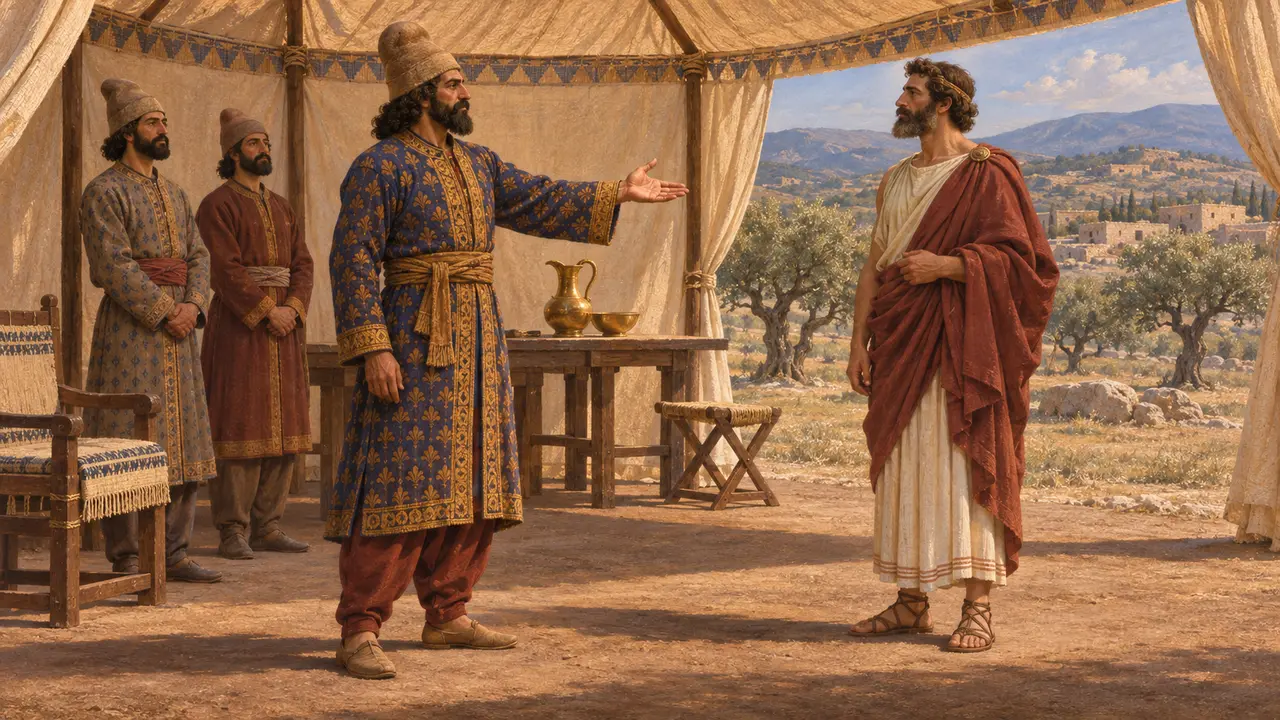
Mardonius chooses his envoy
Ancient accountHerodotus says Mardonius first consulted Greek oracles and then picked Alexander for two reasons. Alexander's sister Gygaea had married the Persian noble Bubares, so he was linked to the Persians by marriage. He was also a proxenos and benefactor of Athens, an official friend of the city. Mardonius hoped the Athenians, with their many ships, would join him and give Persia control of the sea.
Herodotus 8.133-136
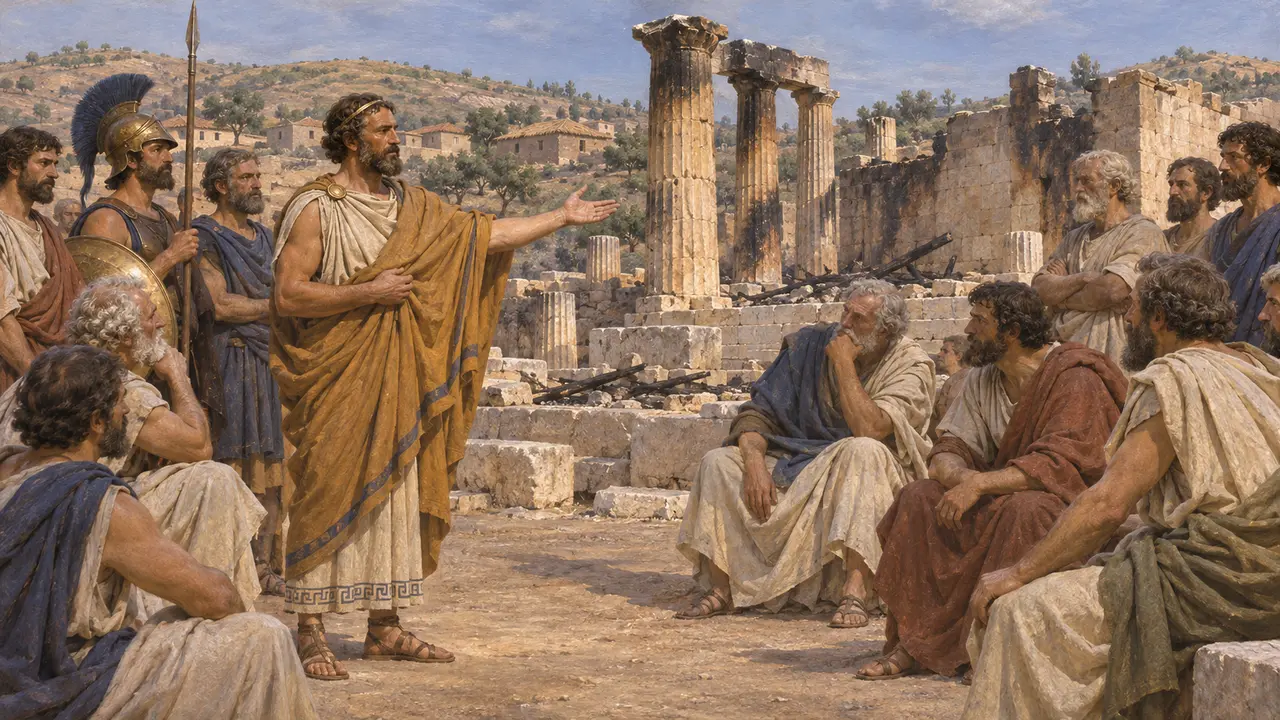
The terms the King offered
Ancient accountIn Herodotus's version, Alexander relayed a message from Xerxes. The King would forgive all past wrongs, return the Athenians' land and let them take more land of their choosing, leave them to govern themselves, and rebuild the temples his army had burned, if they made an alliance. Alexander added his own advice that Persian power was too great to resist and that Attica lay in the path of any new invasion.
Herodotus 8.140
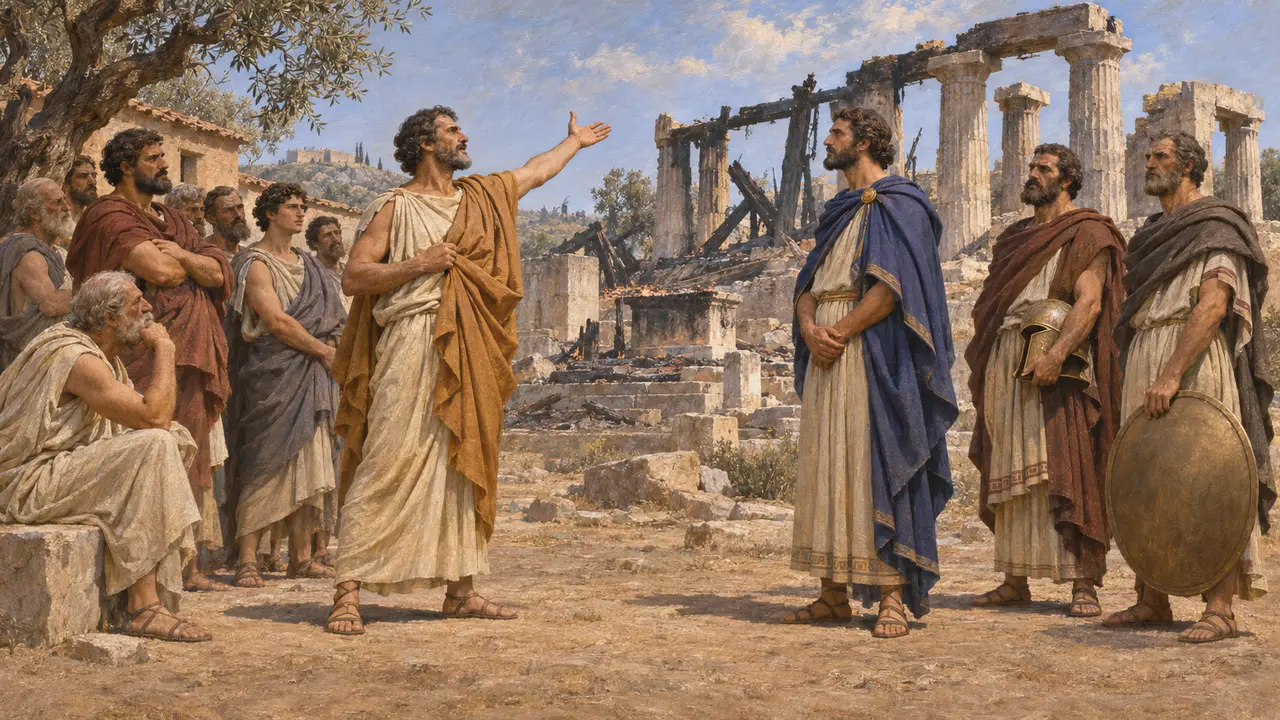
The Athenian answer
Ancient accountSpartan envoys arrived, fearing Athens would accept, and offered to feed Athenian families through the war. Herodotus says the Athenians told Alexander they would never come to terms with Xerxes while the sun kept its course, and warned him not to return. To the Spartans they cited the burned shrines and a shared Greek blood, language, gods and customs, and asked for an army in Boeotia soon.
Herodotus 8.141-144
A friend of both sides
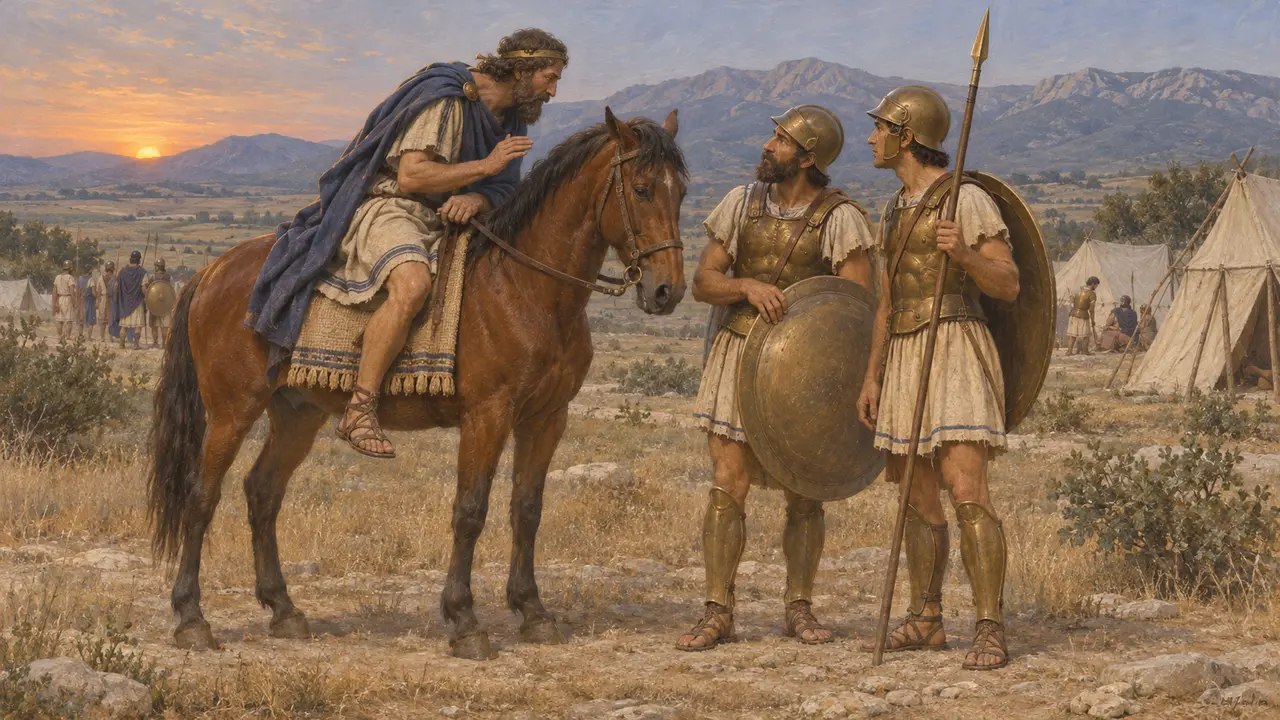
DisputedHerodotus presents Alexander as a Greek at heart. He says Alexander had Persian envoys killed years earlier and later rode to the Greek camp before Plataea to warn them. Many historians, notably Badian, think these stories came from Macedonian claims made after Persia's defeat, to clean up the record of a king who served Xerxes loyally. No Persian source mentions the embassy, and the Athenian speeches are probably largely Herodotus's own composition.
Herodotus 5.17-22; Herodotus 9.44-45; E. Badian, Herodotus on Alexander I of Macedon, 1994
What followed the refusal
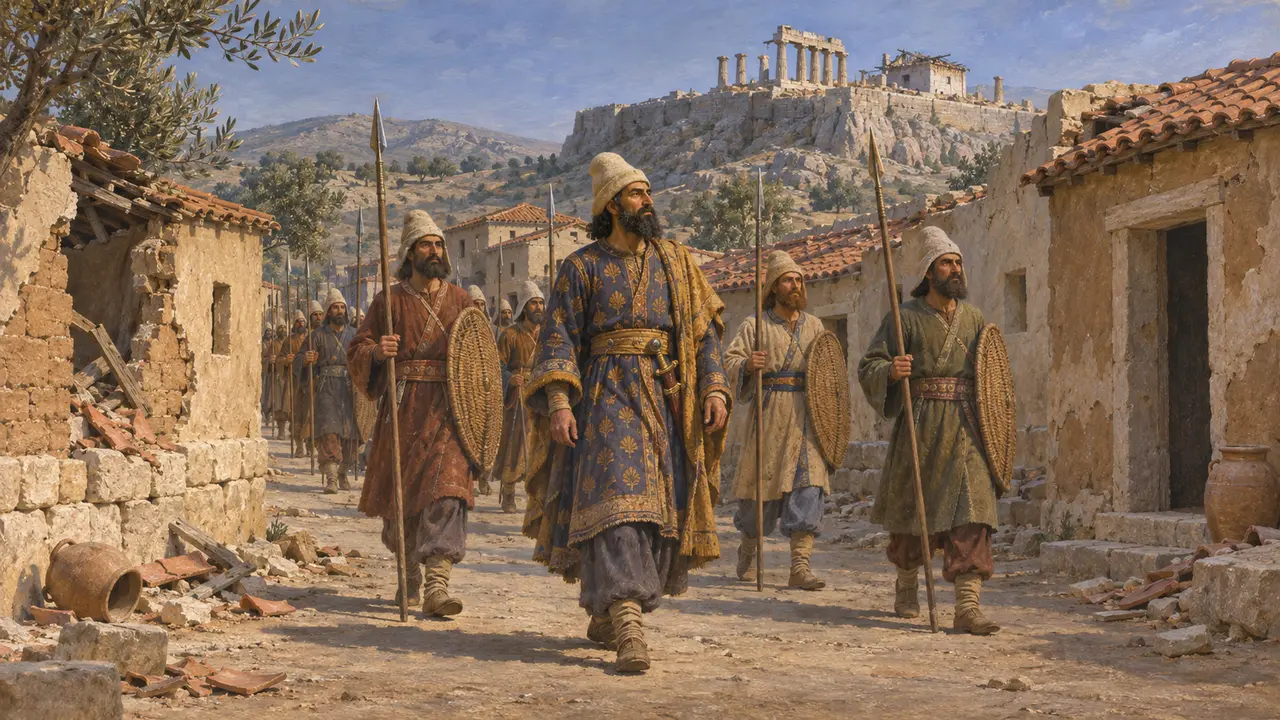
Ancient accountHerodotus says Mardonius then marched south and occupied Athens a second time, the people having again fled to Salamis. He sent a Hellespontine Greek named Murychides with the same offer. One councillor, Lycidas, proposed putting it to the people, and the Athenians stoned him to death. After some delay the Spartans sent their army north, and the campaign ended at Plataea.
Herodotus 9.1-11
Sources
- Herodotus 8.133-144
- Herodotus 9.1-11
- Herodotus 5.17-22
- E. Badian, Herodotus on Alexander I of Macedon: A Study in Some Subtle Silences, 1994
- P. Briant, From Cyrus to Alexander, 2002
- N. G. L. Hammond and G. T. Griffith, A History of Macedonia II, 1979