Encyclopedia › Soldiers and ships
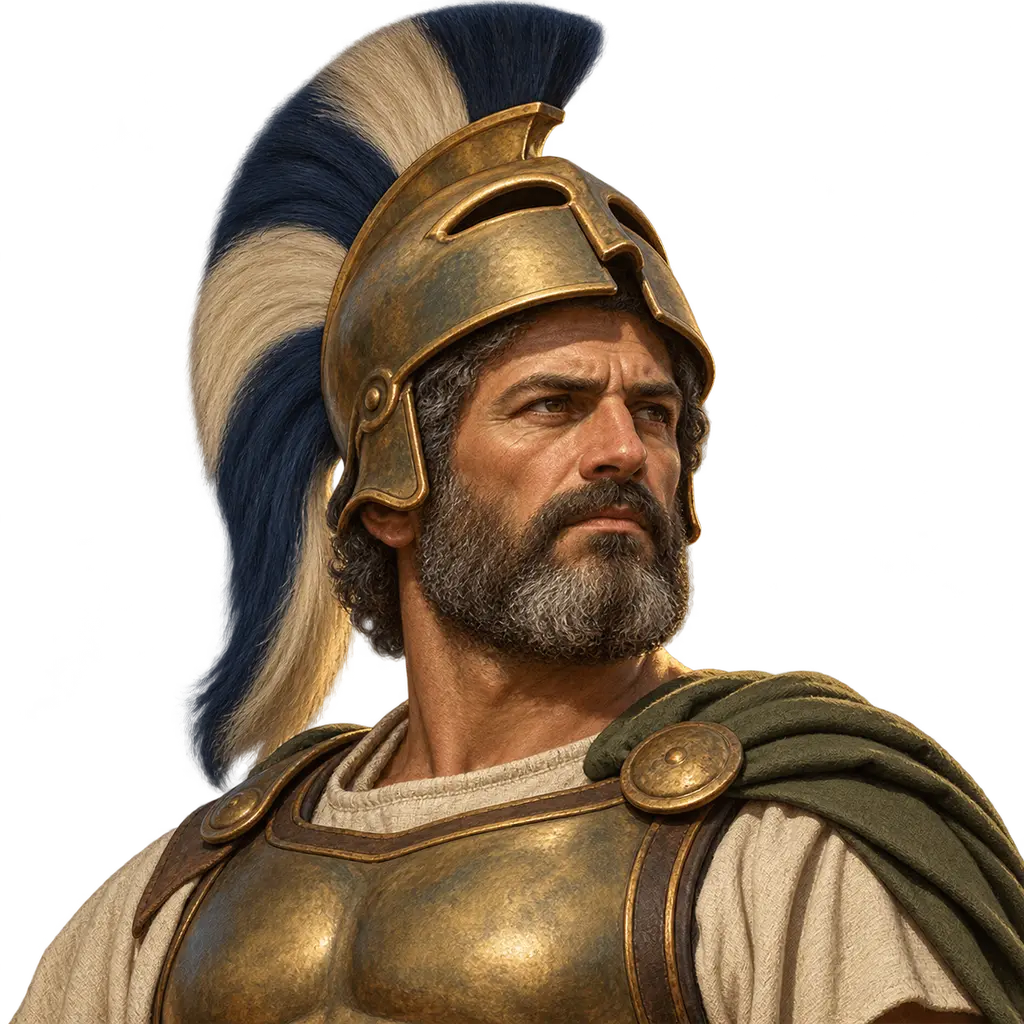
Greek generals
Commanders of Athens and the Ionian cities against Persia, 499-490 BCE
The Greek cities that fought Persia had no single supreme commander. Athens elected ten generals, the strategoi, beside an older magistrate, the polemarch. The Ionian cities in revolt drove out their tyrants and chose generals of their own, with Aristagoras of Miletus at their head. Their councils and quarrels shaped the campaigns from 499 to 490.
In the game: In the Sardis and Marathon levels the Greek side fields commanders named Athenian General, Athenian Strategos, Ionian Captain and Callimachus the Polemarch, each standing for a real office or man of the time.
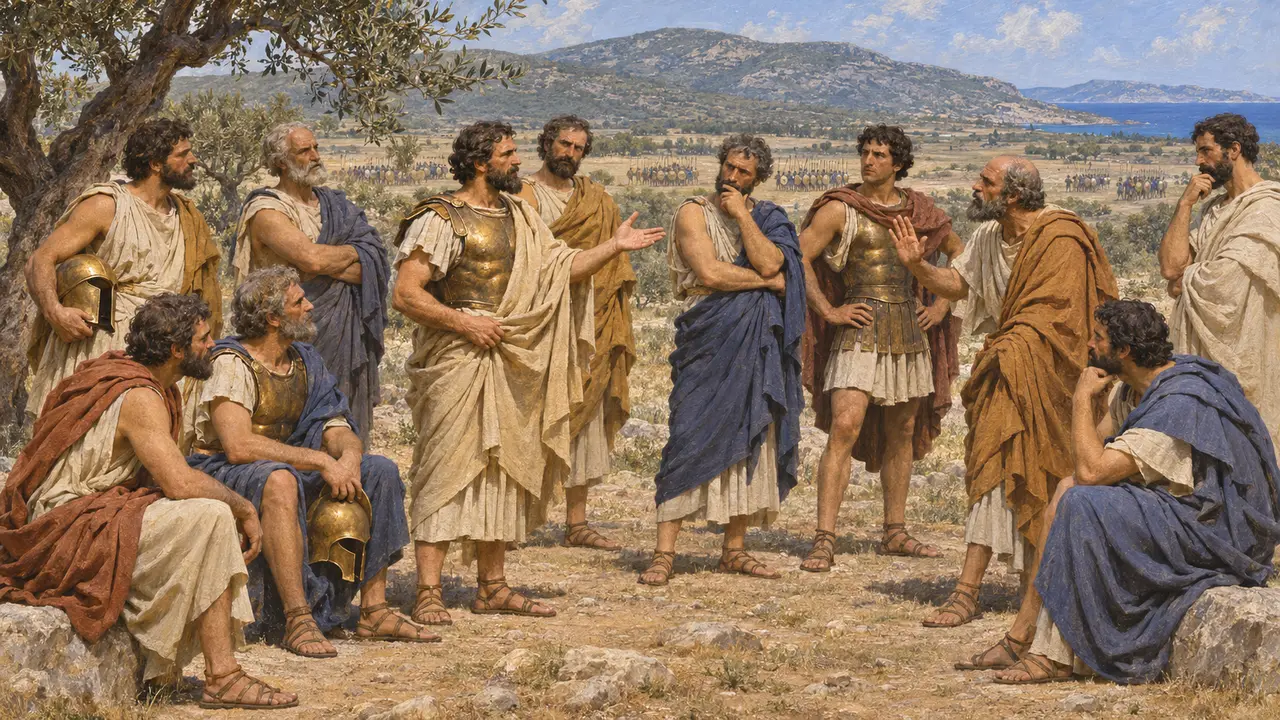
Ten generals for ten tribes
Ancient accountHerodotus says Athens sent ten generals to Marathon, Miltiades among them, and that they were divided over whether to fight. The Constitution of the Athenians dates the election of one general from each of the ten tribes to 501/0, a few years after the reforms of Cleisthenes. A general served for one year and could be re-elected. He probably led his own tribe's contingent and debated strategy with the other nine.
Herodotus 6.103; 6.109; Athenaion Politeia 22.2
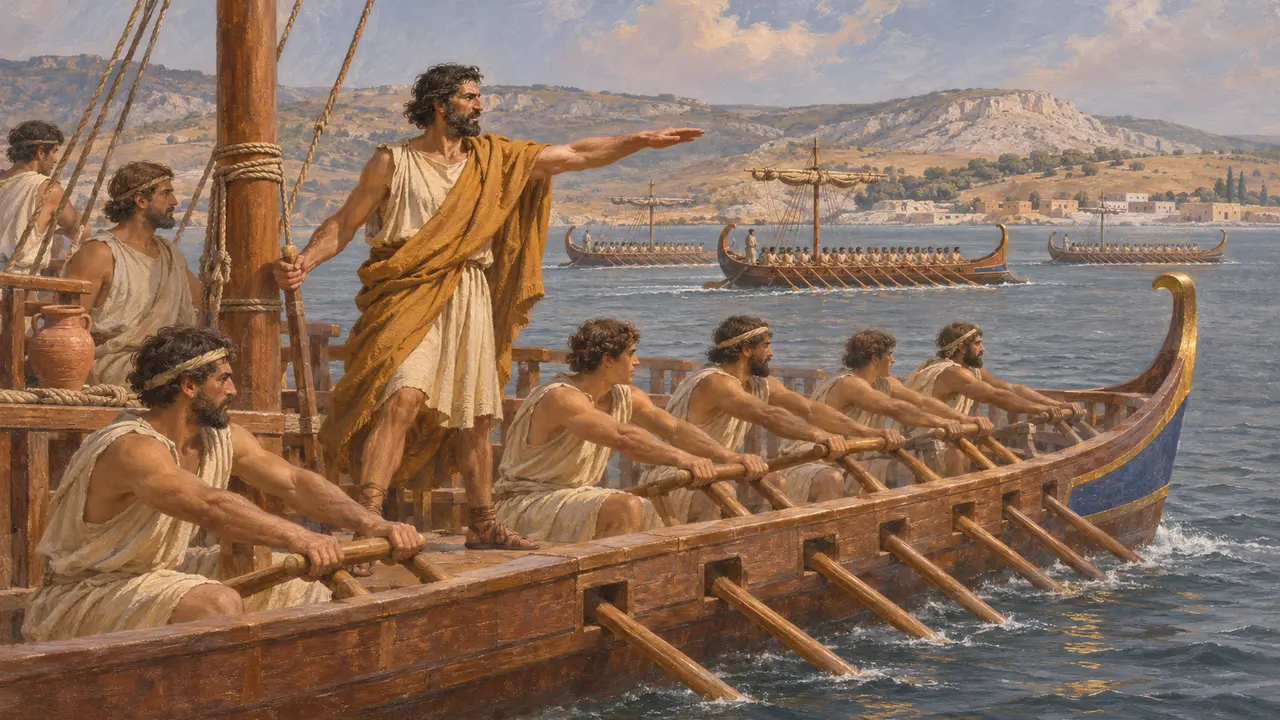
Captains of the Ionian revolt
Ancient accountHerodotus says Aristagoras gave up his tyranny at Miletus and had the Ionian cities appoint generals. For the march on Sardis in 498 he named his brother Charopinus and Hermophantus as commanders. Melanthius led the twenty Athenian ships, and Eualcides led the Eretrians until he fell near Ephesus. Before Lade in 494, Dionysius of Phocaea drilled the fleet for seven days until the crews refused to go on.
Herodotus 5.37-38; 5.97-102; 6.11-12
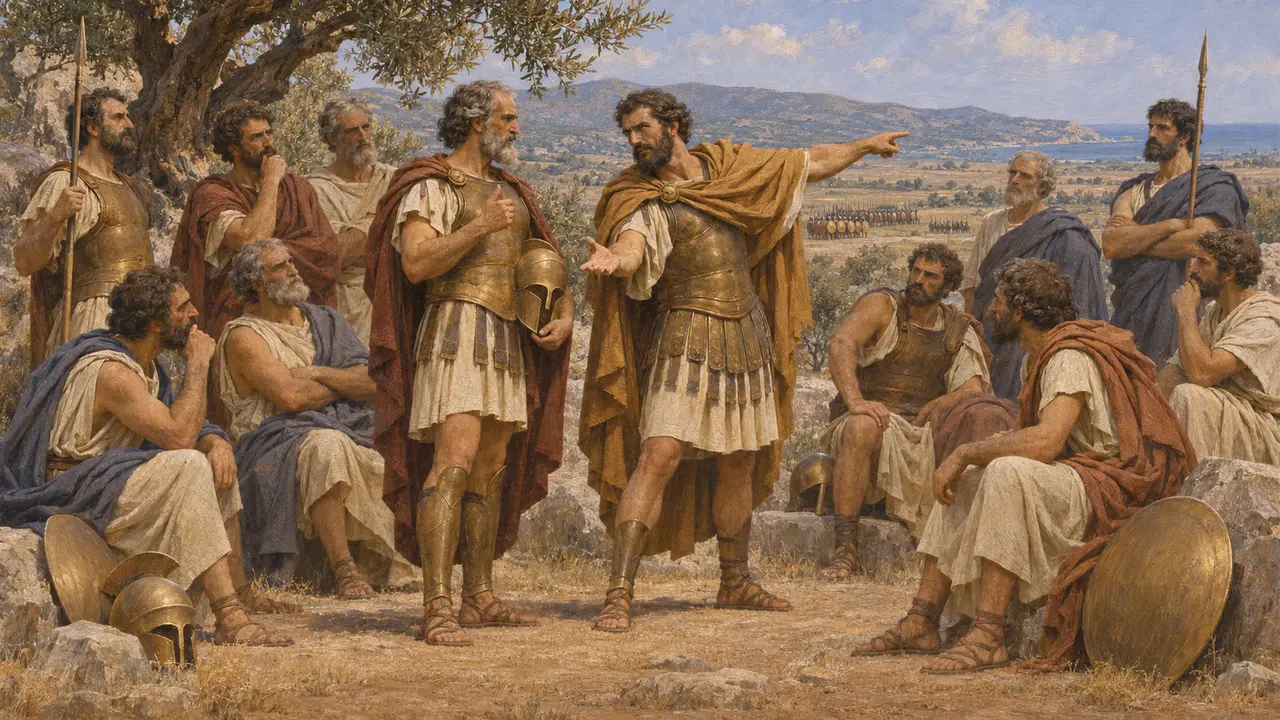
Callimachus and the casting vote
Ancient accountHerodotus says the ten generals at Marathon were divided and the cautious view was close to winning, but the polemarch also had a vote. Miltiades persuaded Callimachus of Aphidna to vote for battle. The generals held command in turn, one day each, and those who favoured battle gave their days to Miltiades, who still waited for his own day. By custom the polemarch held the right wing, and Callimachus died in the fighting.
Herodotus 6.109-111; 6.114
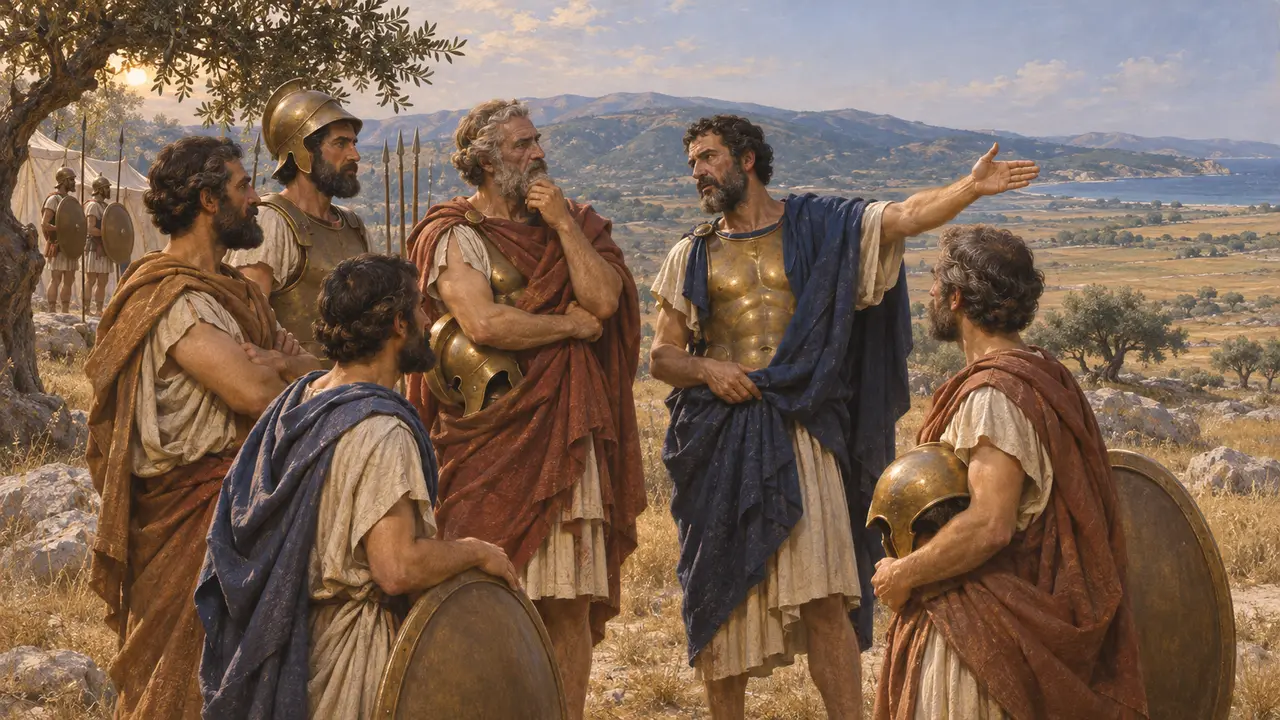
Who led the Athenians at Marathon
DisputedHerodotus says Callimachus was chosen polemarch by lot. The Constitution of the Athenians, however, dates the use of the lot for archons to 487/6, three years later, which suggests he was elected. Historians still argue whether the polemarch in 490 was the real commander or only a senior colleague of the generals. Herodotus's picture of Miltiades as the guiding mind may also reflect stories later told by Miltiades' family and supporters.
Herodotus 6.109; Athenaion Politeia 22.5; P. Krentz, The Battle of Marathon, 2010
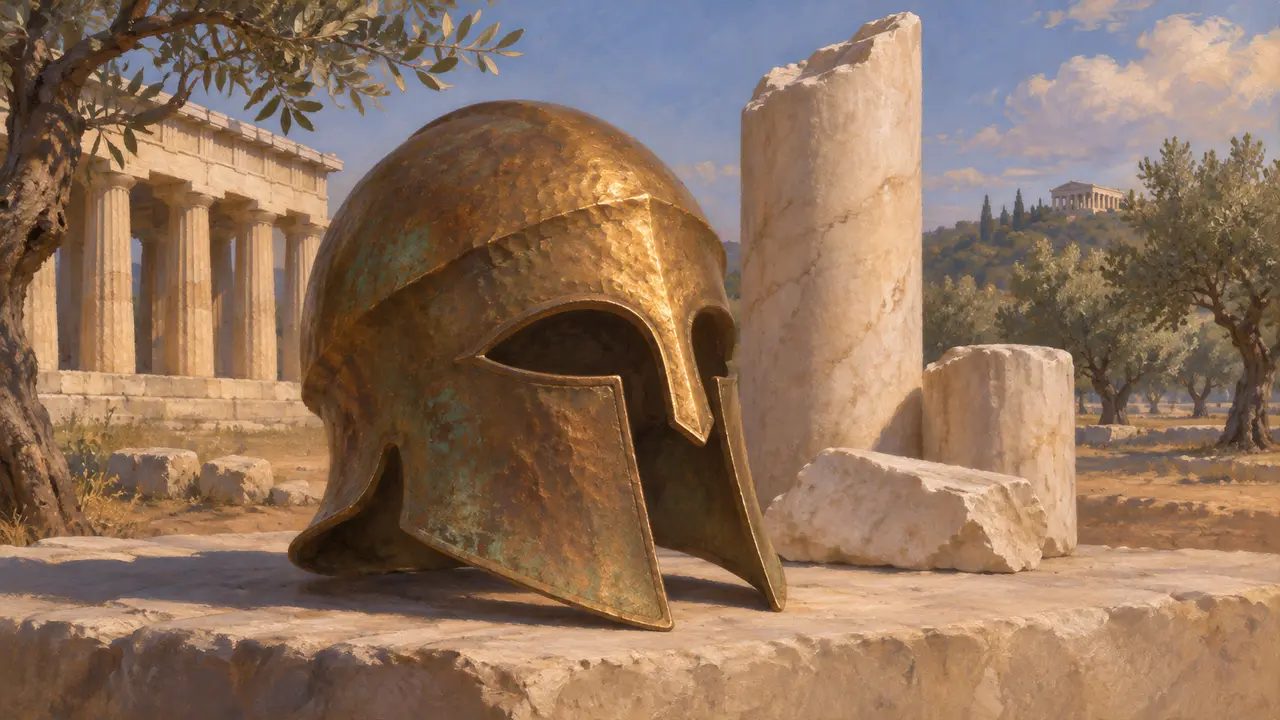
Names in bronze and stone
In the recordA bronze Corinthian helmet found at Olympia is inscribed as a dedication by Miltiades to Zeus. It is usually linked to the victor of Marathon. On the Acropolis, fragments of a marble column carry an epigram naming Callimachus of Aphidna as polemarch. Its restored text is often read as a vow completed after his death at Marathon. The helmet is in the Olympia museum and the column in the Acropolis Museum.
Miltiades helmet, Archaeological Museum of Olympia; IG I³ 784
Sources
- Herodotus, Histories, books 5-6
- Athenaion Politeia 22
- IG I³ 784 (Callimachus dedication)
- P. Krentz, The Battle of Marathon, 2010
- P. Briant, From Cyrus to Alexander, 2002