Encyclopedia › Battles and events
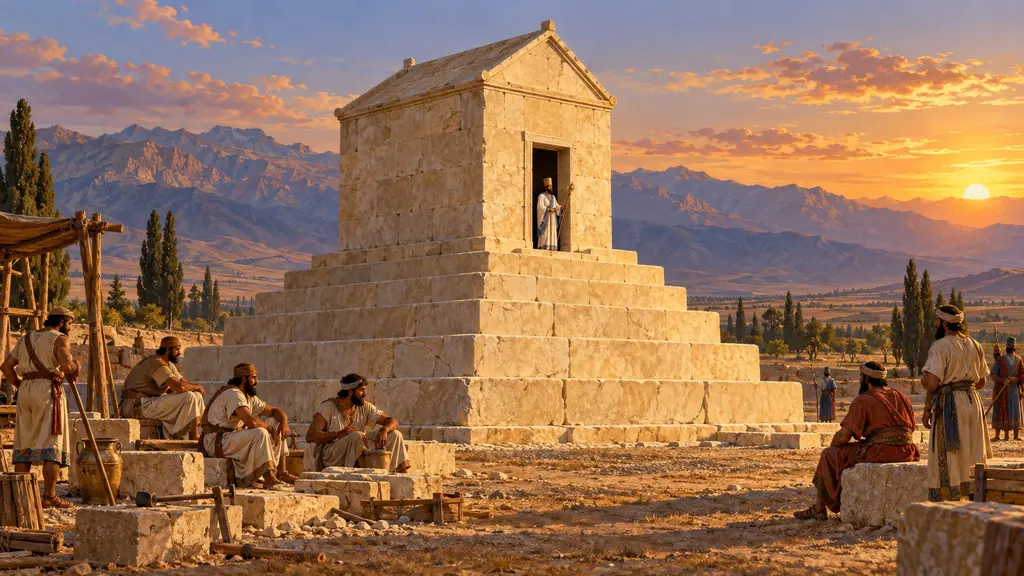
The burial of Cyrus
The entombment of the founder of the empire at Pasargadae, Persis, about 530 BCE
In the game: Level 1: The Founder's Tomb
Cyrus died in 530 while campaigning in the far north-east, and Babylonian tablets show Cambyses reigning by the end of that year. A stone tomb at Pasargadae, still standing, was later known as Cyrus's resting place. No text from the time describes the funeral, so the story is pieced together from the tomb itself and from Greek writers.
In the game: The first level is built around making the tomb ready, and magi guard it afterwards; the body's homecoming follows Ctesias. Herodotus does not mention it, and no Persian text of the time records the funeral.
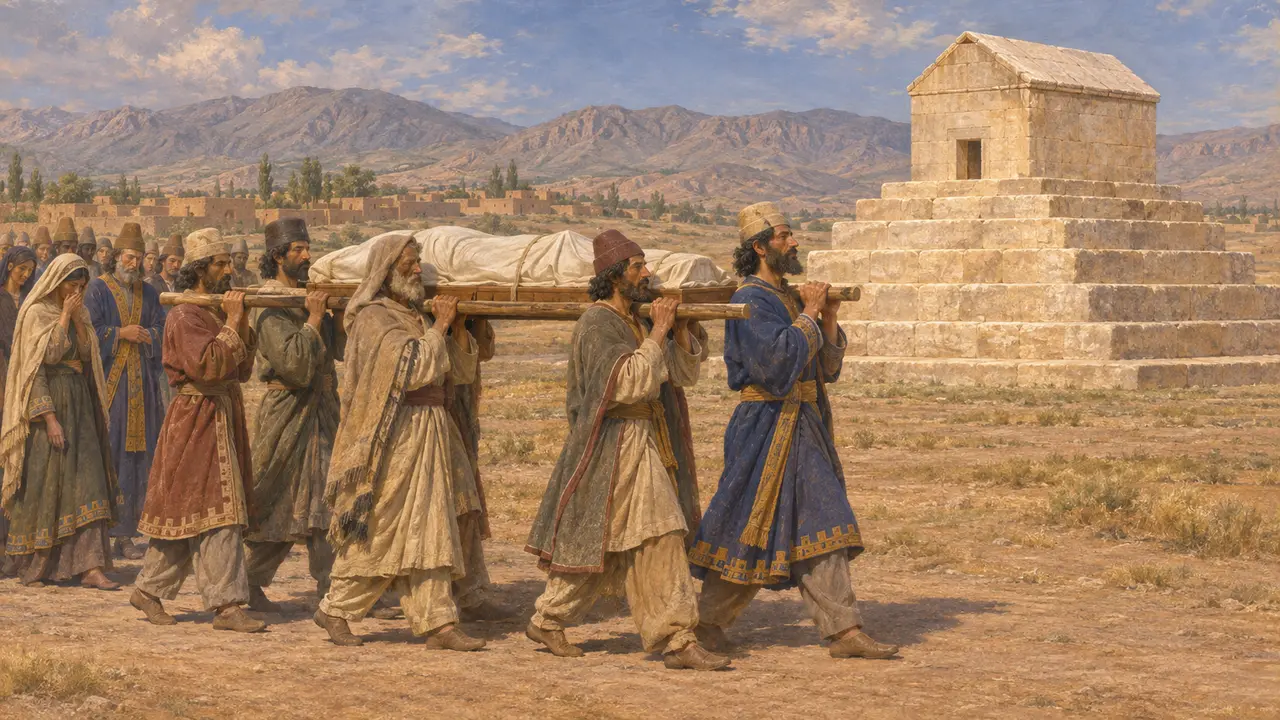
How Cyrus died
DisputedThe ancient writers disagree. Herodotus says Cyrus was killed fighting the Massagetae beyond the Araxes, while Xenophon has him die peacefully in his bed among his sons. Ctesias says he died of a wound taken against the Derbices and that Cambyses sent the body home to Persia. He is the only one of the three who clearly describes the body being brought back, and historians cannot say which version of the death is true.
Herodotus 1.214; Ctesias, Persica (in Photius); Xenophon, Cyropaedia 8.7
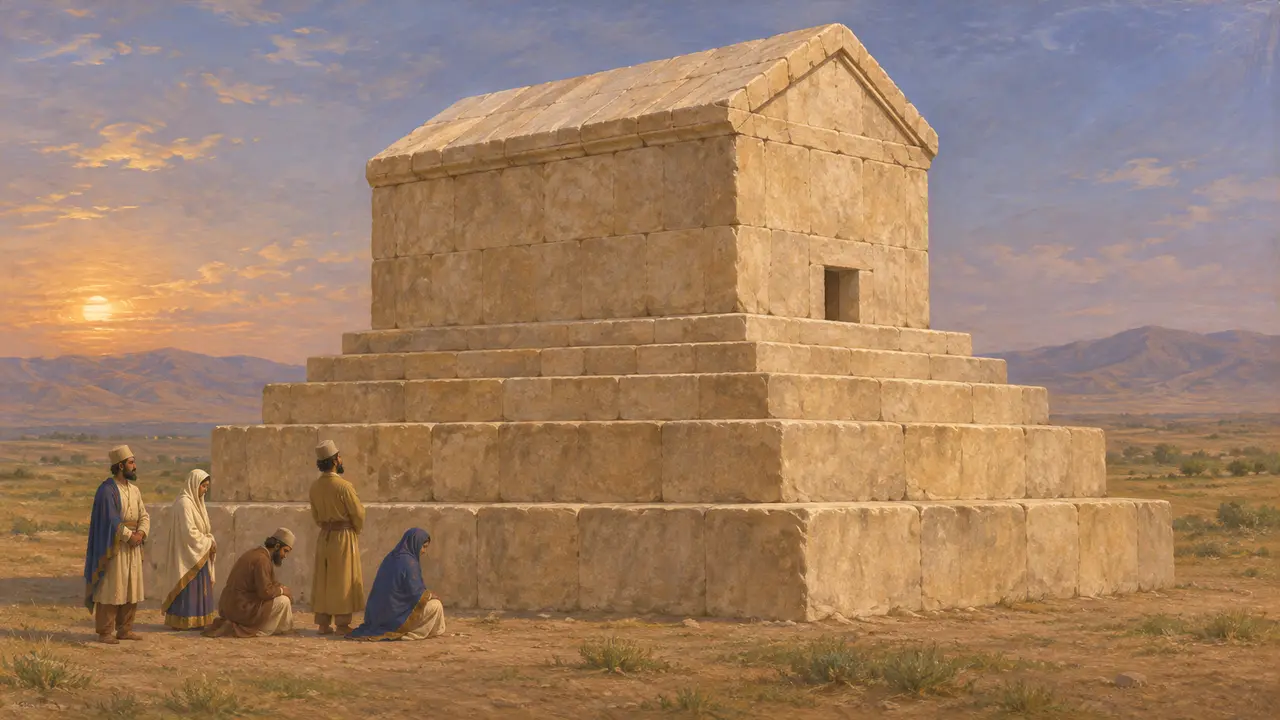
The tomb at Pasargadae
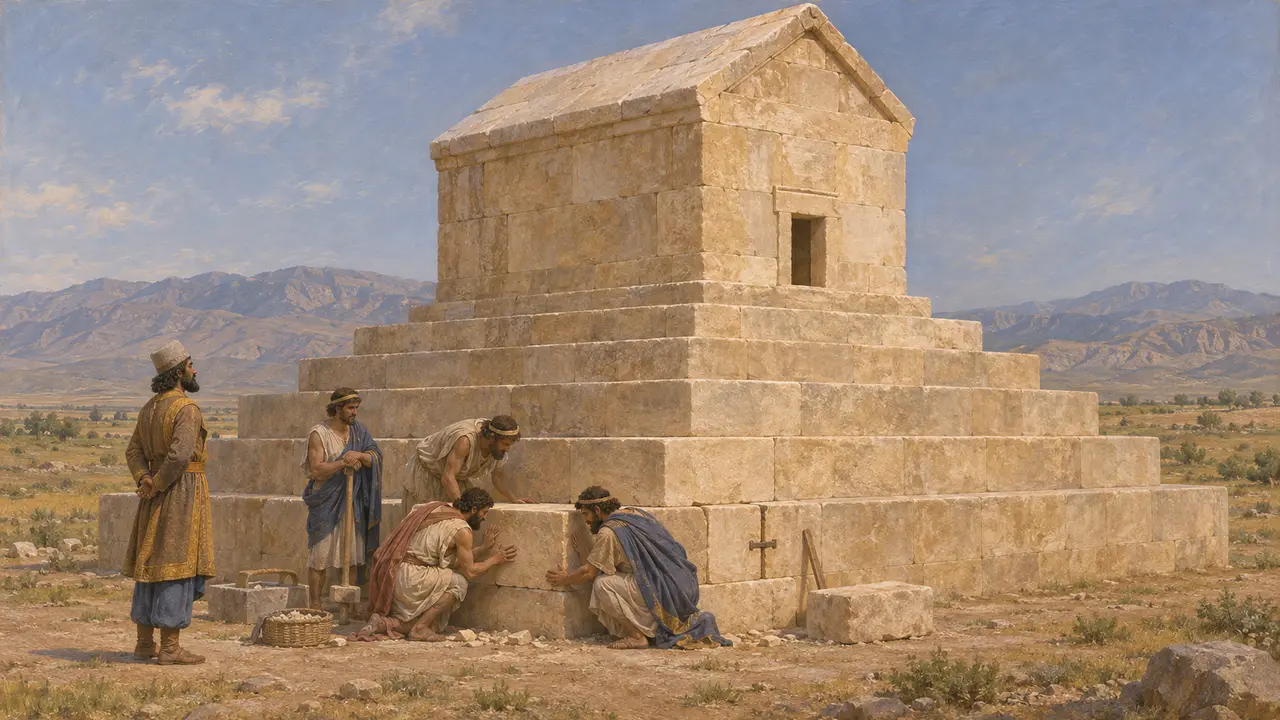
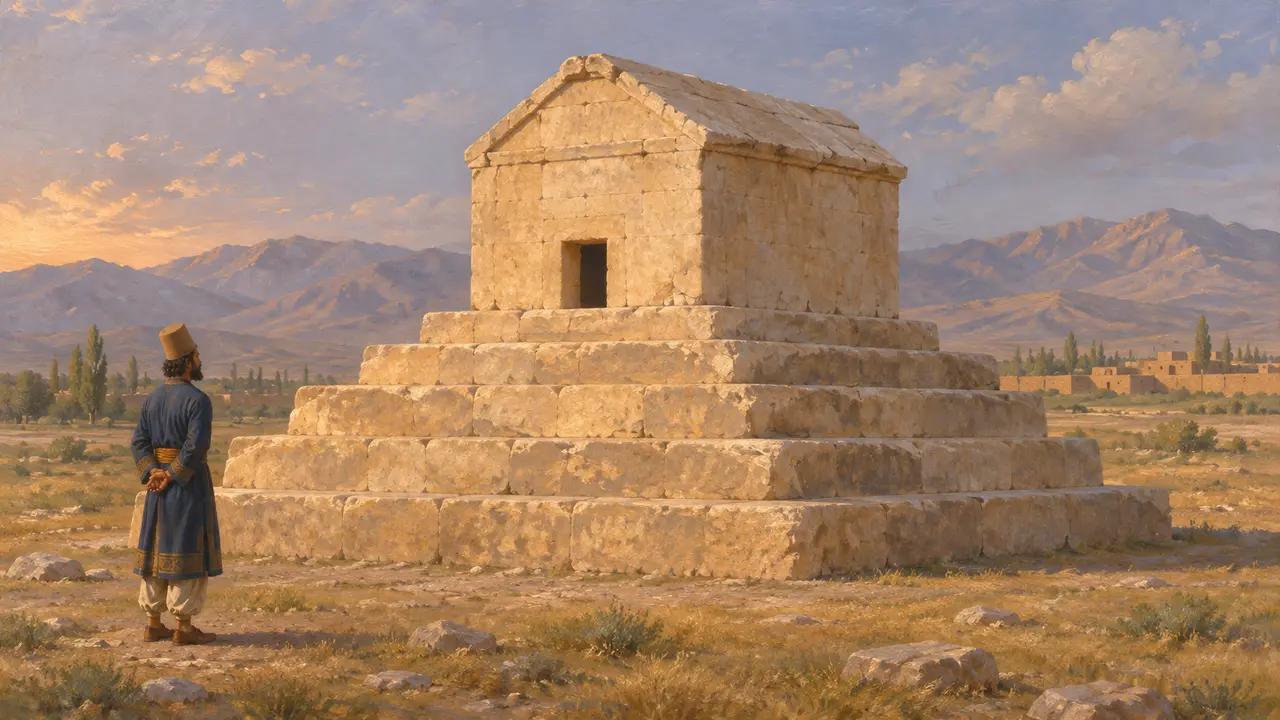
In the recordThe tomb stands on the plain south-west of the palaces. It is a gabled stone chamber on a plinth of six steps, about 11 metres high, built of large limestone blocks joined with metal clamps. The chamber inside is small, a little over 3 metres long and about 2 wide, with a low doorway, and it bears no inscription today. In medieval times local tradition called it the tomb of the mother of Solomon.
D. Stronach, Pasargadae, 1978
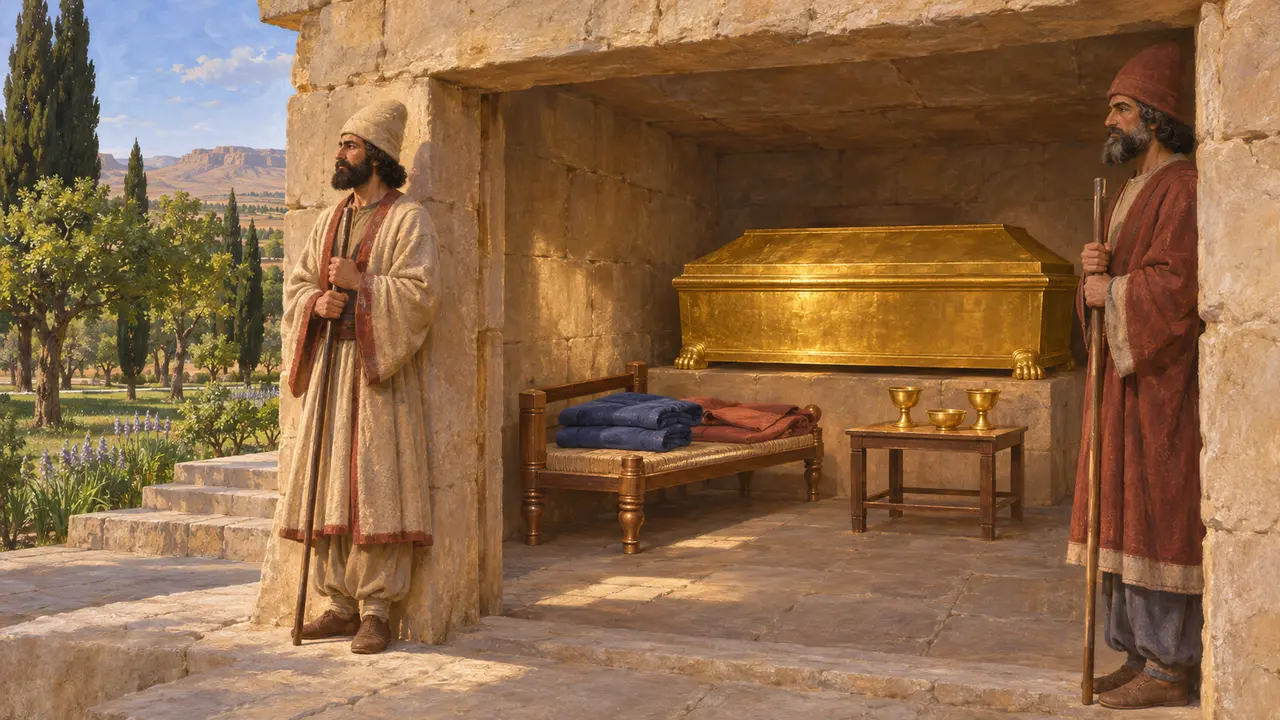
What Alexander's men found
Ancient accountArrian, following Aristobulus, says the tomb stood in a park of trees. Inside were a gold coffin, a couch, a table with cups, and fine garments. Magi kept guard, a duty passed from father to son since the time of Cambyses, and they received a sheep each day and a horse each month to sacrifice to Cyrus. By 324 the tomb had been robbed, and Alexander ordered it restored.
Arrian, Anabasis 6.29; Strabo 15.3.7
Who built it, and when
DisputedHistorians argue over whether Cyrus built the tomb in his lifetime or Cambyses finished it after his death. The fine masonry and clamps point to Lydian and Ionian stoneworkers, so it probably dates after the conquest of Sardis. Under Darius, Persepolis tablets record regular offerings for dead members of the royal house. They show such cults existed, but they do not describe the funeral of Cyrus.
D. Stronach, Pasargadae, 1978; W. Henkelman, The Other Gods Who Are, 2008
The queen's revenge and the epitaph
Later legendHerodotus tells that Tomyris, queen of the Massagetae, dipped the dead king's head in a skin of blood so that he might have his fill. The tale is shaped as a lesson about greed for conquest. Later writers record an epitaph in which Cyrus asks the passer-by not to begrudge him the little earth that covers him. No trace of that inscription survives, and it may be a literary invention.
Herodotus 1.214; Plutarch, Alexander 69; Strabo 15.3.7
Sources
- Arrian, Anabasis 6.29
- D. Stronach, Pasargadae, 1978
- Herodotus 1.214
- Ctesias, Persica (in Photius)
- Xenophon, Cyropaedia 8.7
- P. Briant, From Cyrus to Alexander, 2002