Gatehouse
Fortified and ceremonial gateways of the Achaemenid world, about 550-479 BCE
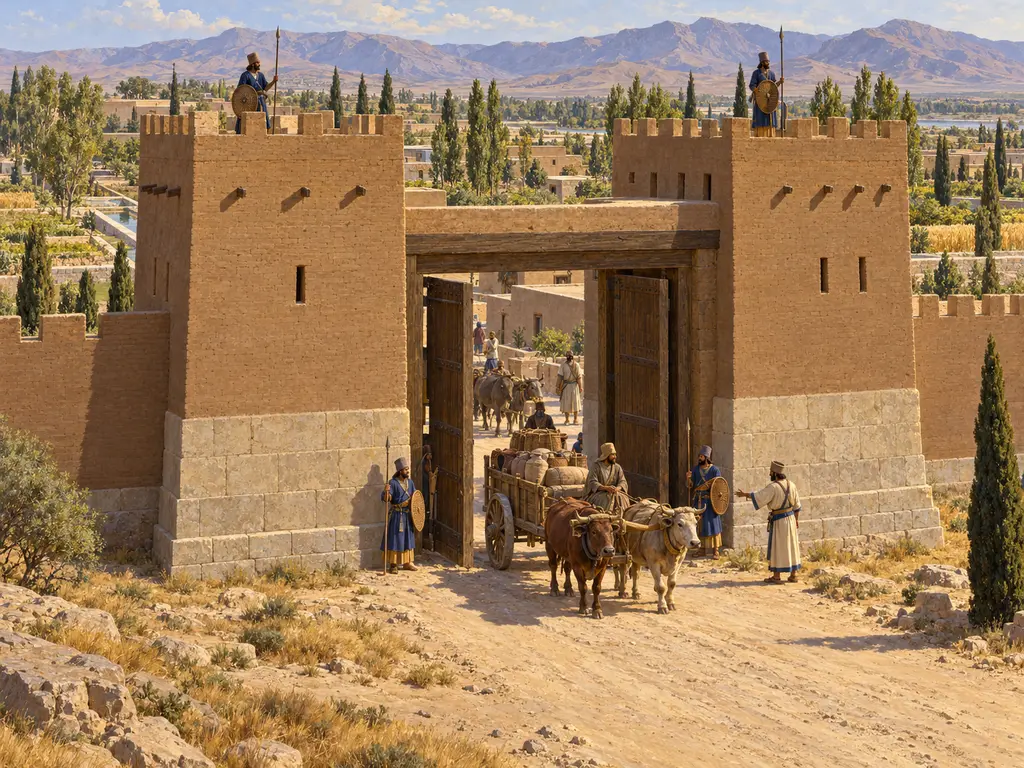
A gatehouse stood where a wall met a road. It was one of the few ways into a walled city or palace and often the first place an attacker struck. In the Persian empire gateways served both defence and display: town walls had strong gates, while the King's residences had monumental gatehouses that controlled who came near him.
In the game: The Gatehouse is a historic structure already on a level's map, not built by the player. Its cedar doors open in peace and shut against raiders; rams and fire harm it and masons repair it. Real town gates more likely used local timber.
Gateways of the royal cities
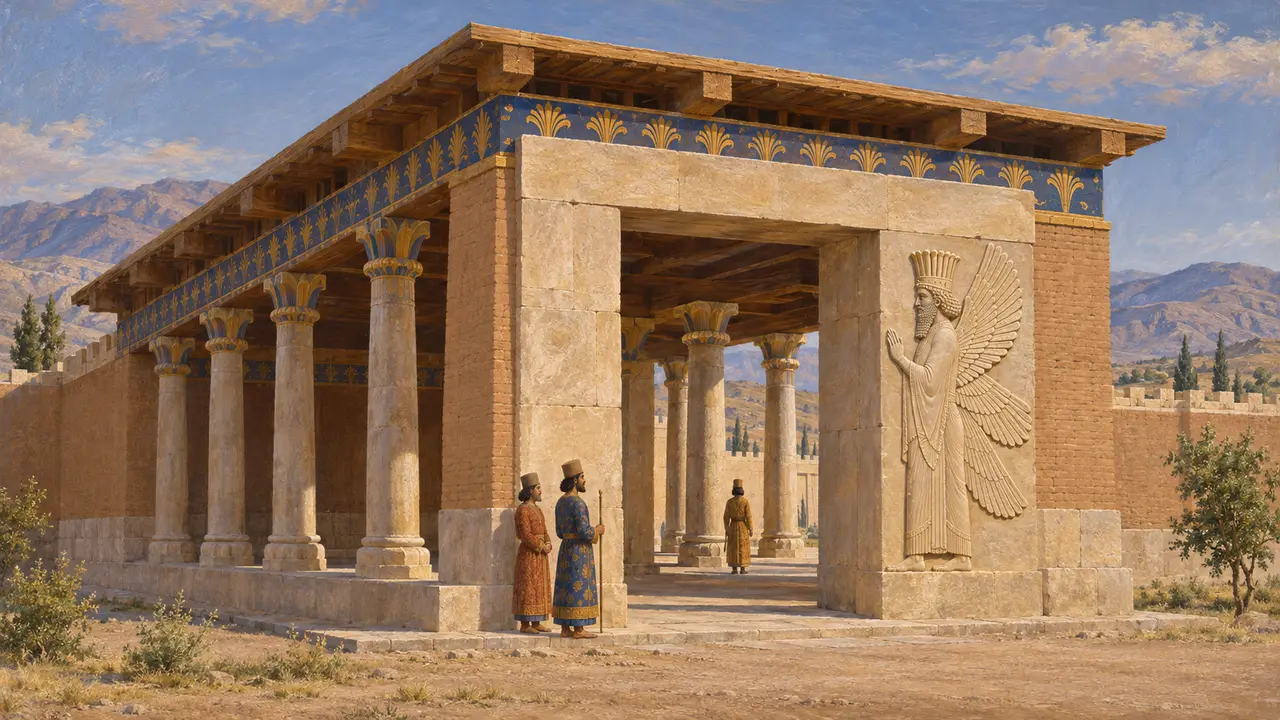
In the recordAt Pasargadae the gatehouse known as Gate R kept a carved four-winged figure on one of its doorjambs. At Persepolis, Xerxes says in his inscription on the Gate of All Nations that he built that gateway. At Susa, excavators found a large gatehouse east of the palace of Darius, and a statue of Darius made in Egypt was found there in 1972.
D. Stronach, Pasargadae, 1978; XPa; J. Perrot (ed.), The Palace of Darius at Susa, 2013
Doors, pivots and timber
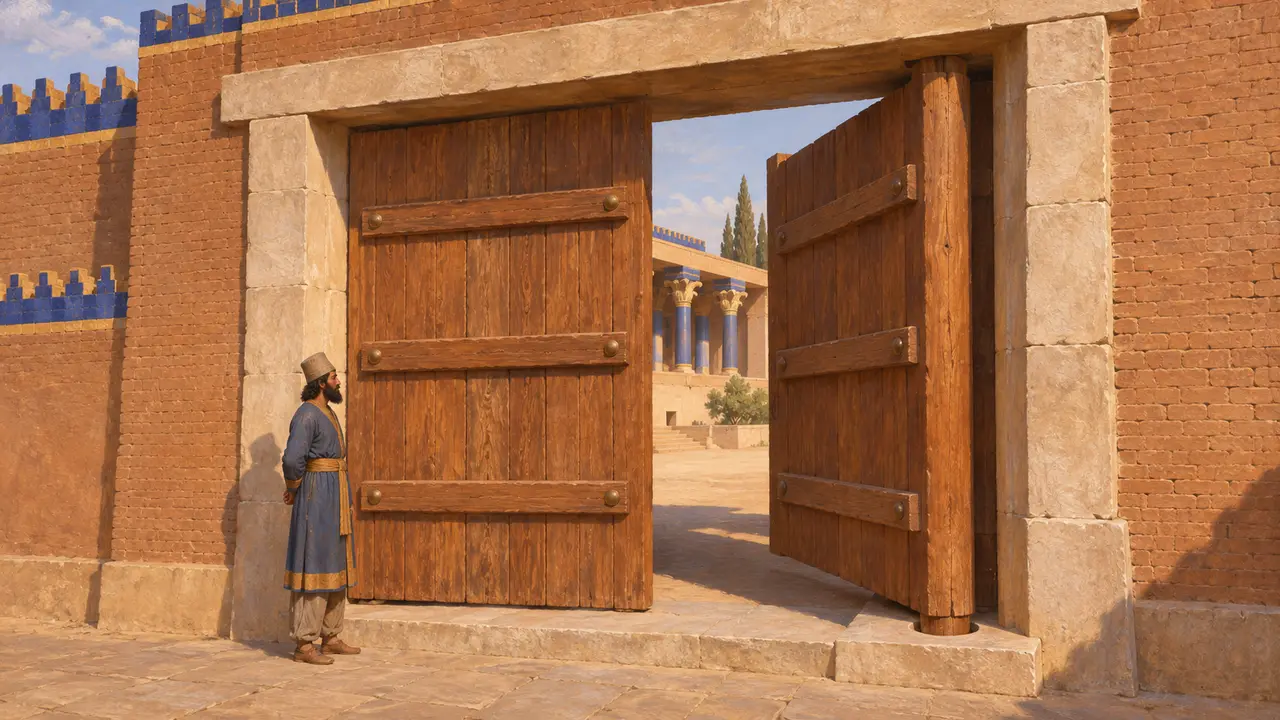
In the recordThe gate doors themselves have not survived. Stone sockets for door pivots show that heavy double doors turned in the great gateways. Darius's foundation charter from Susa says cedar was brought from the Lebanon mountains for his palace. Fine imported timber of this kind went to royal buildings, and there is no record of it being used for ordinary town gates.
DSf; E. Schmidt, Persepolis I, 1953
Gates under attack
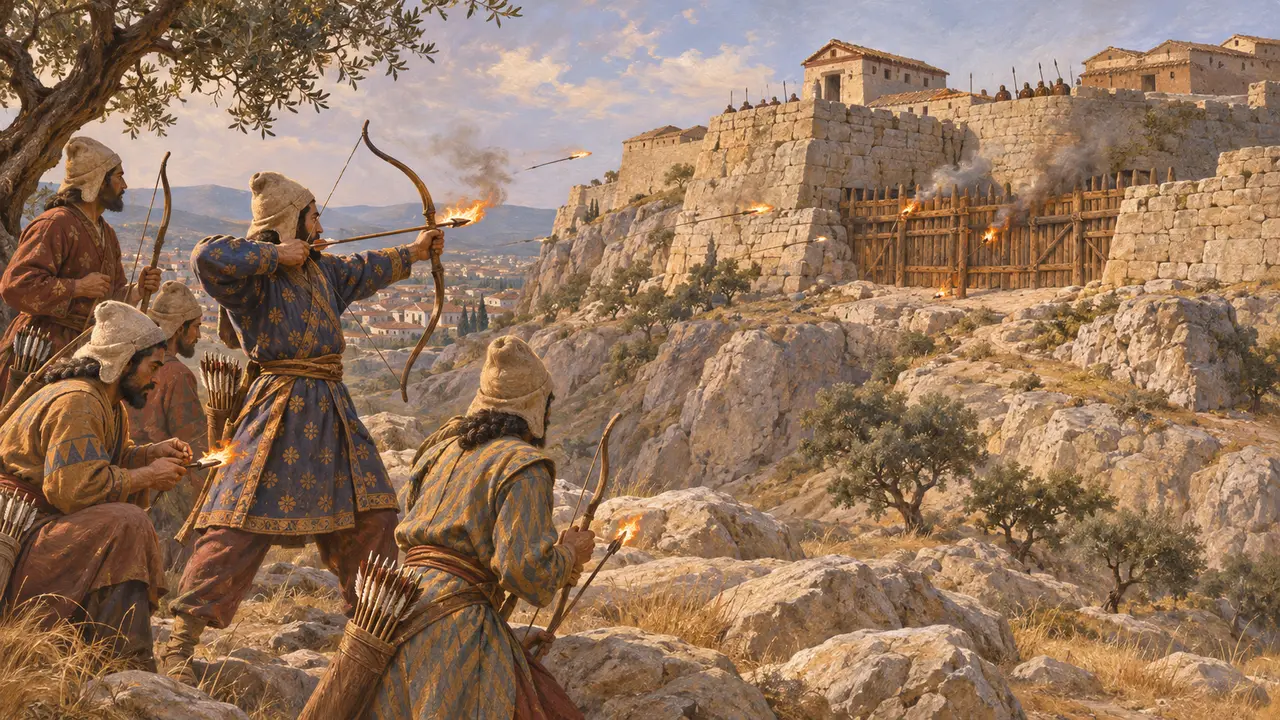
Ancient accountHerodotus says the walls of Babylon had a hundred gates all of bronze. He probably meant wooden doors sheathed in bronze. He also tells how the Persians took Soli in Cyprus, about 497, in the fifth month of the siege by digging mines under its wall. In 480, he says, Persians on the Areopagus shot arrows wrapped in burning tow at the wooden barricade on the Acropolis of Athens.
Herodotus 1.179; Herodotus 5.115; Herodotus 8.52
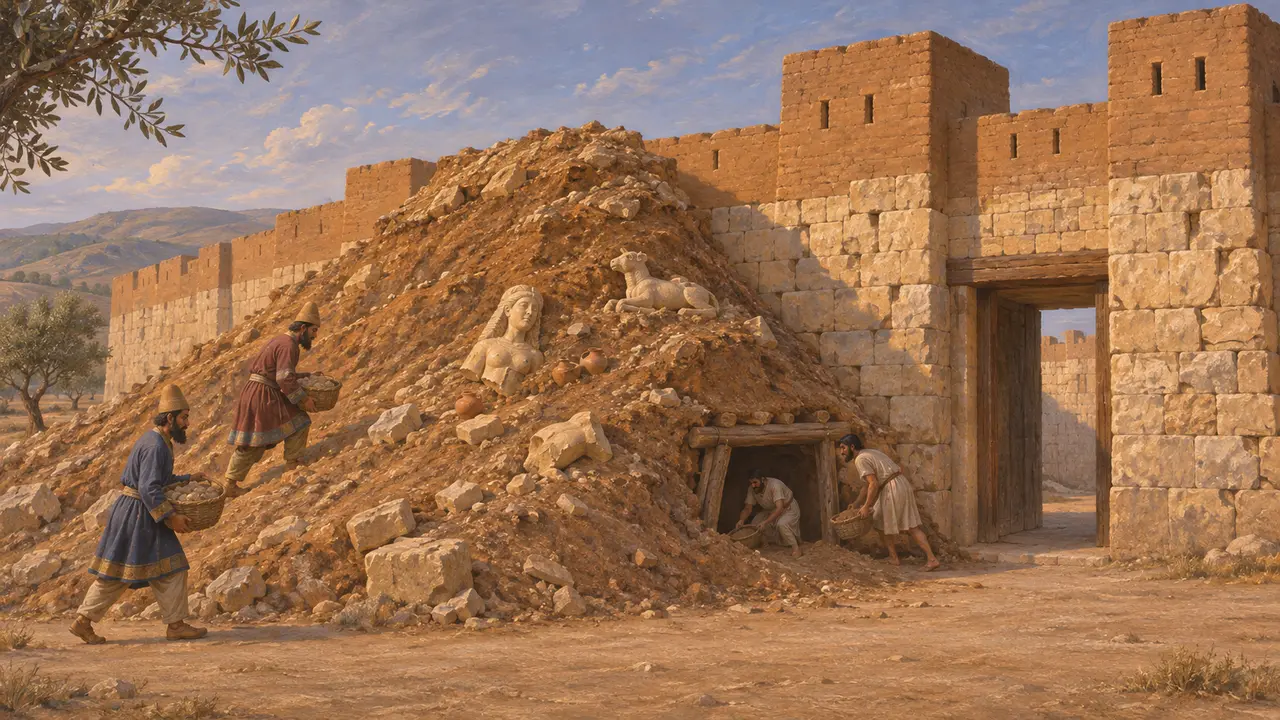
The siege mound at Paphos
In the recordAt Palaepaphos in Cyprus, excavators found a great siege mound of earth, stone and rubble heaped against the wall beside the northeast gate. It is dated to the Persian reconquest of Cyprus after the revolt of 498-497. Its fill included broken statues and votive offerings, and the defenders dug tunnels beneath it to make it collapse. No ancient writer describes this siege.
F. G. Maier and V. Karageorghis, Paphos: History and Archaeology, 1984
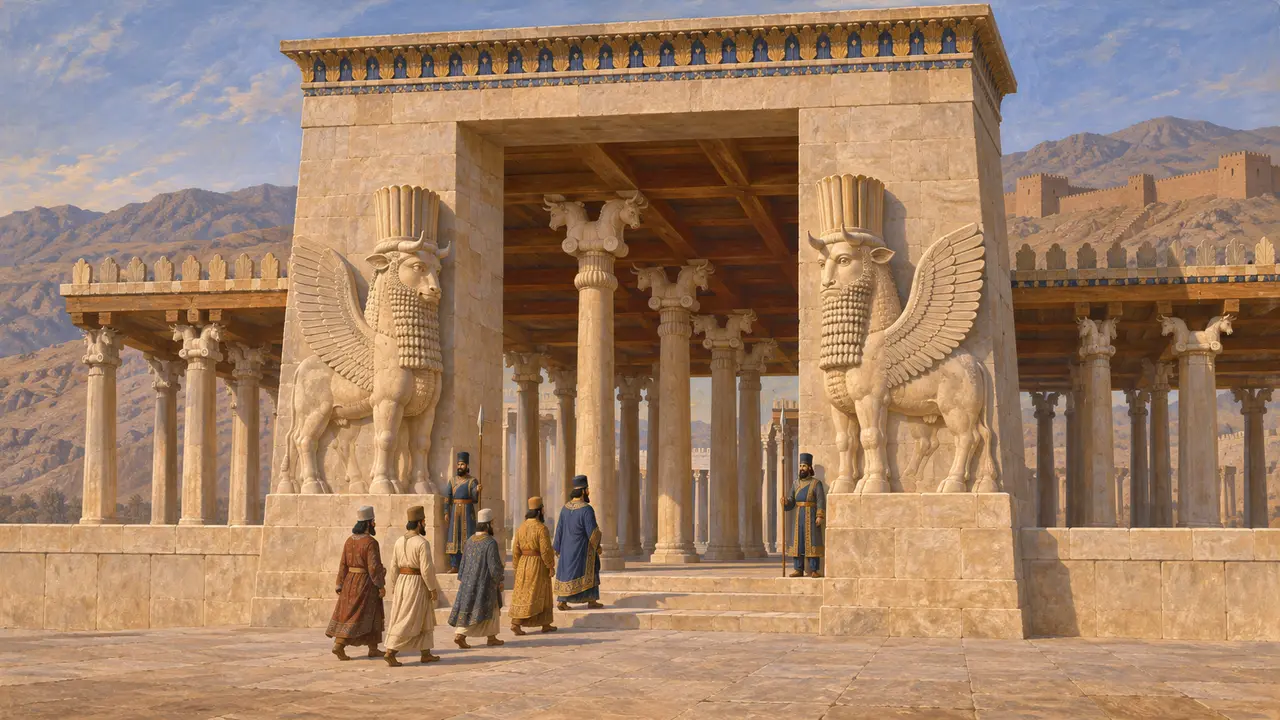
Defence or display
DisputedHistorians still debate how far the royal gatehouses were built for defence. Persepolis had a fortification wall with towers on the hillside behind it. The Gate of All Nations and Gate R at Pasargadae look more like formal entrances for receiving visitors. Many scholars think these gates were mainly meant to regulate approach to the King and to impress those who came.
P. Briant, From Cyrus to Alexander, 2002; E. Schmidt, Persepolis I, 1953
Sources
- D. Stronach, Pasargadae, 1978
- E. Schmidt, Persepolis I, 1953
- J. Perrot (ed.), The Palace of Darius at Susa, 2013
- DSf; XPa
- Herodotus 1.179; 5.115; 8.52
- F. G. Maier and V. Karageorghis, Paphos: History and Archaeology, 1984