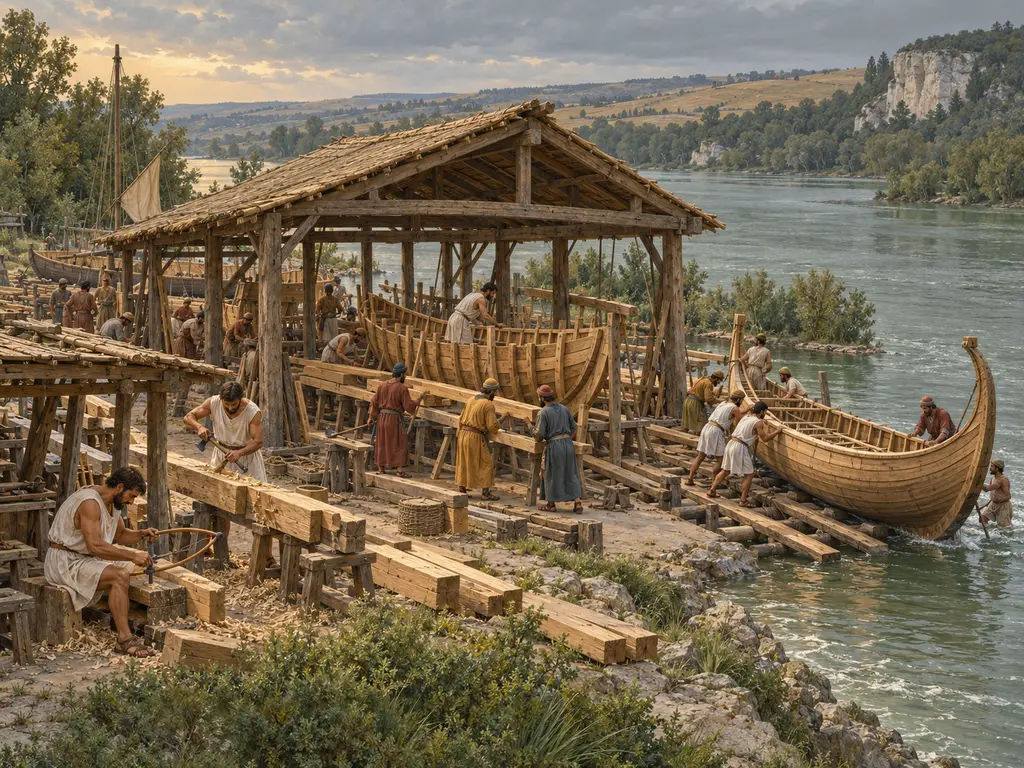
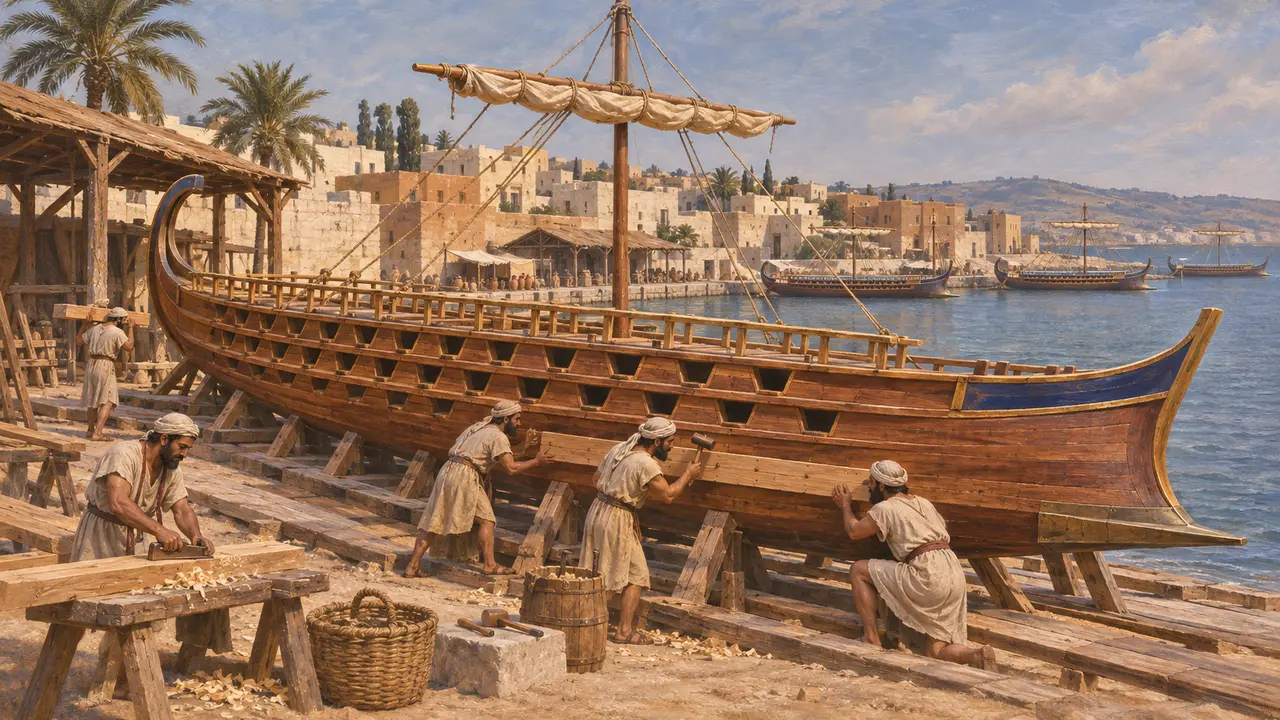
Phoenician Shipyard
Phoenician shipbuilders of the King's fleet, Sidon and Tyre, about 525-479 BCE
In the game: Level 7: Sardis Burns
The Phoenician cities of the Levant coast, above all Sidon, Tyre and Arwad, supplied the core of the Persian navy from Cambyses to Xerxes. Their shipwrights and crews built and sailed the triremes that carried armies to Egypt, fought the Ionians at Lade and crossed to Greece. Their merchant ships also traded under the King's rule, and in Egypt they paid duties to his customs officers.
In the game: In the game the yard builds triremes beside water and sends marines to the host. Historically the King's warships came from the Phoenician cities, Cyprus, Cilicia and Egypt, not from yards at Sardis or in Greece.
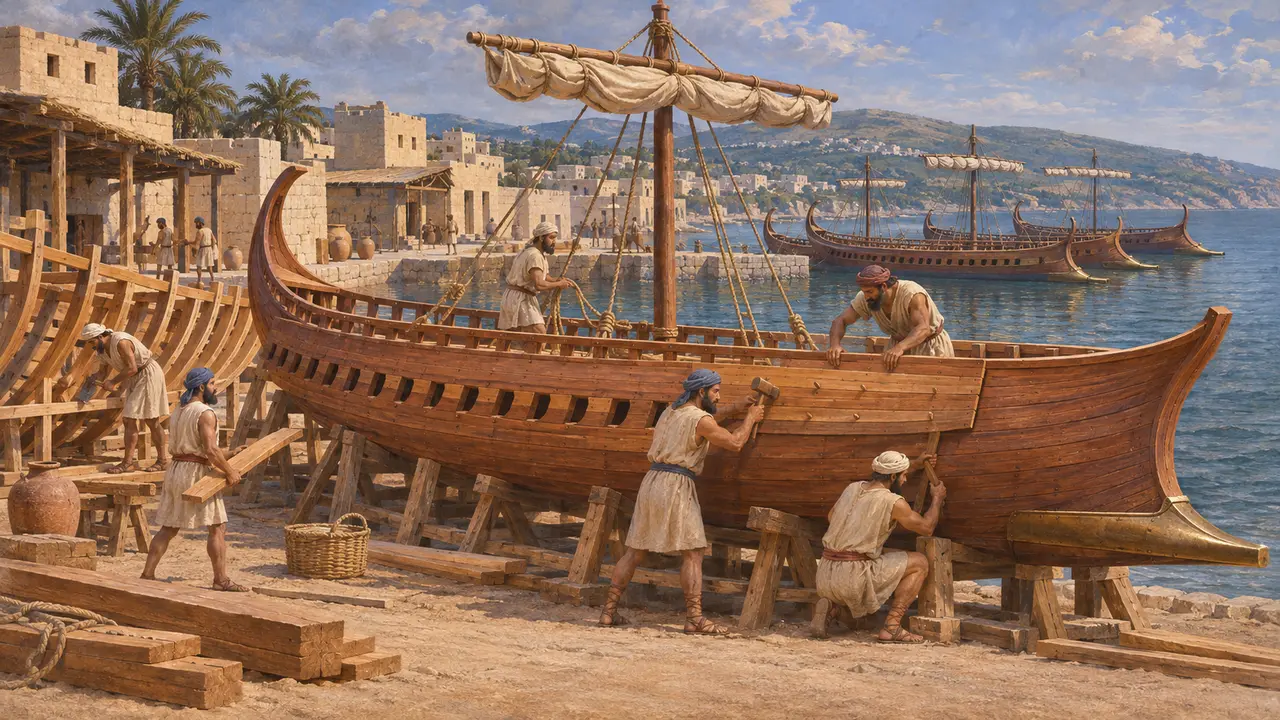
Sidon, Tyre and the King's navy
Ancient accountHerodotus says that the whole of Cambyses' fleet depended on the Phoenicians, who refused to sail against Carthage, their own colony. For Xerxes' fleet of 480 he counts 300 ships from the Phoenicians and the Syrians of Palestine, the largest contingent, under kings of Sidon, Tyre and Arwad. He ranks the Phoenician ships as the best sailers and the Sidonian as the best of those. He says Xerxes reviewed the fleet at Doriscus from a Sidonian ship.
Herodotus 3.19; 7.89; 7.96; 7.98; 7.100
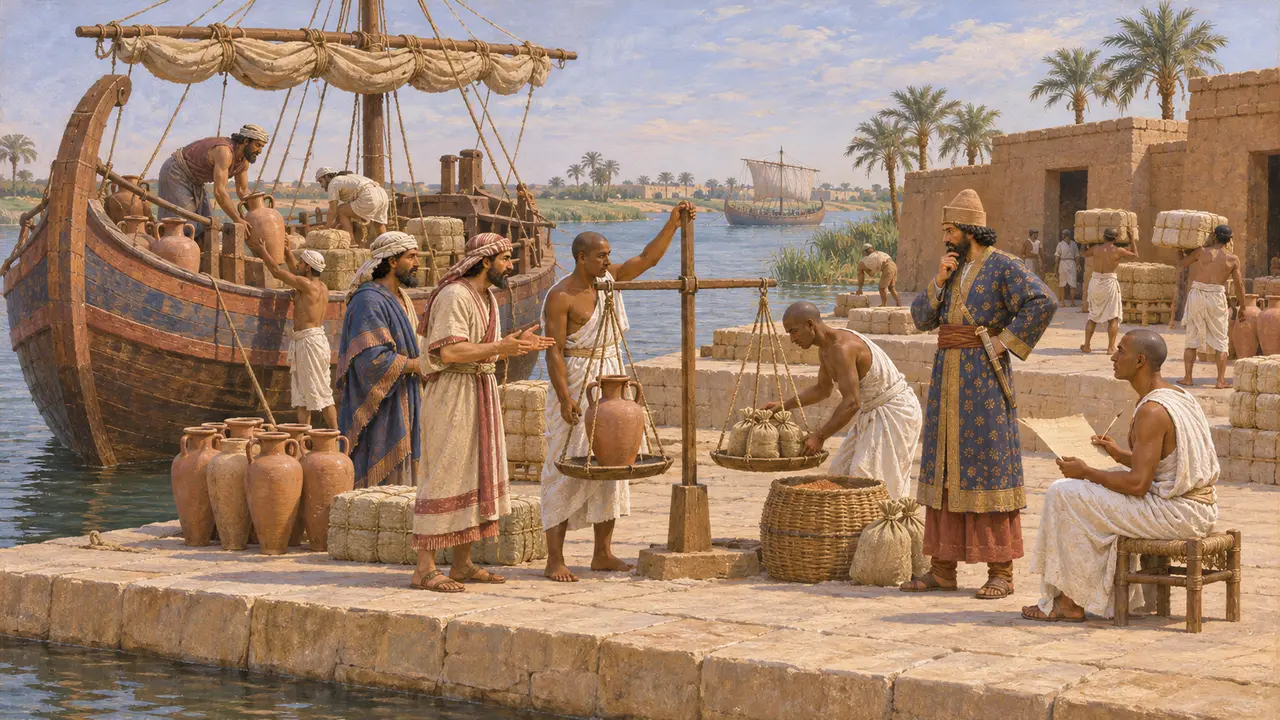
Merchant ships in the royal accounts
In the recordA customs account of about 475, written in Aramaic, survives from Elephantine. It was later erased so the scroll could be reused for the story of Ahiqar. It lists Ionian and Phoenician ships entering Egypt over most of one year, and the duties the King's officials took from their cargoes. It shows Phoenician merchant shipping working within the royal tax system under Xerxes.
TAD C3.7
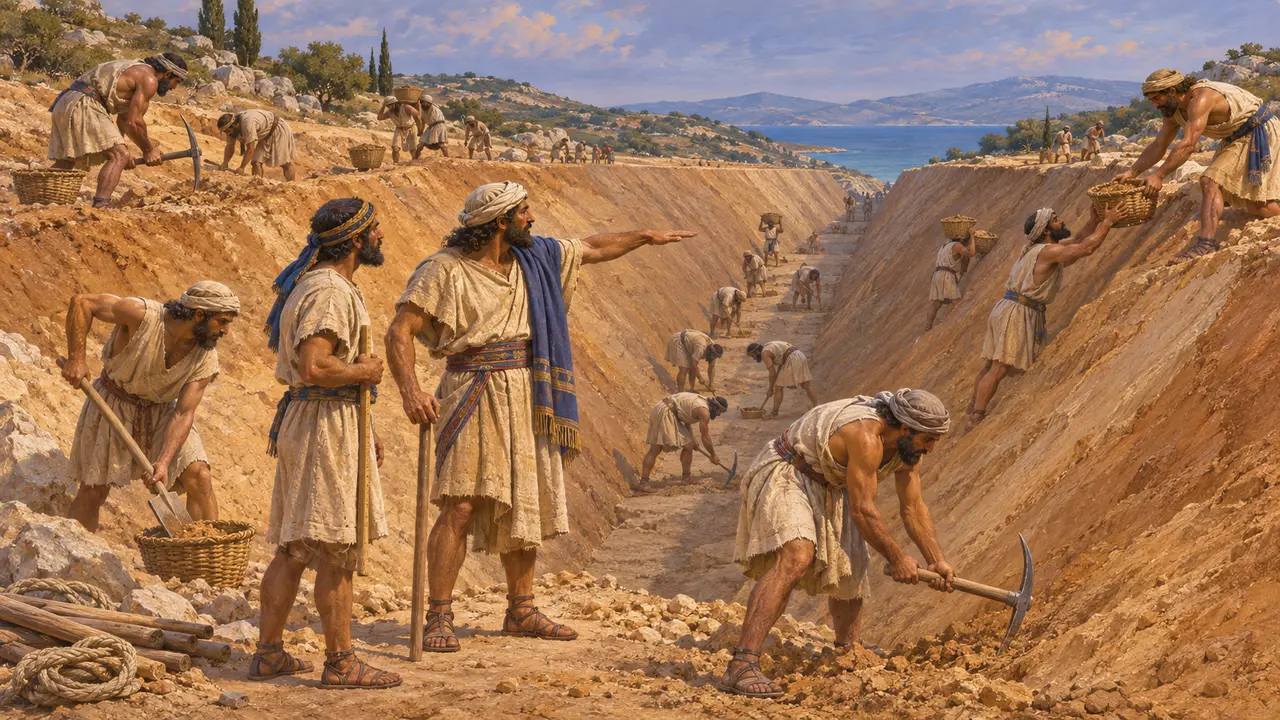
Phoenician skill on Xerxes' great works
Ancient accountHerodotus says that at the Athos canal only the Phoenicians dug their stretch wider at the top than at the bottom, so its sides did not fall in. For the Hellespont bridges the Phoenicians made cables of white flax and the Egyptians cables of papyrus. After Salamis, he says, Xerxes had some Phoenician captains beheaded when they blamed the Ionians for their losses.
Herodotus 7.23; 7.25; 7.34; 8.90
Where the trireme came from
DisputedThucydides credits the Corinthians with the first Greek triremes. Herodotus says the pharaoh Necho built triremes for both the Mediterranean and the Red Sea. Some historians think the type began in Phoenicia. Others argue it spread widely only in the later sixth century, partly because Persian kings paid for large fleets. Herodotus gives 1,207 triremes in 480, and Aeschylus gives a similar figure, but many historians think the number too high.
Thucydides 1.13; Herodotus 2.159; 7.89; H. T. Wallinga, Ships and Sea-Power before the Great Persian War, 1993
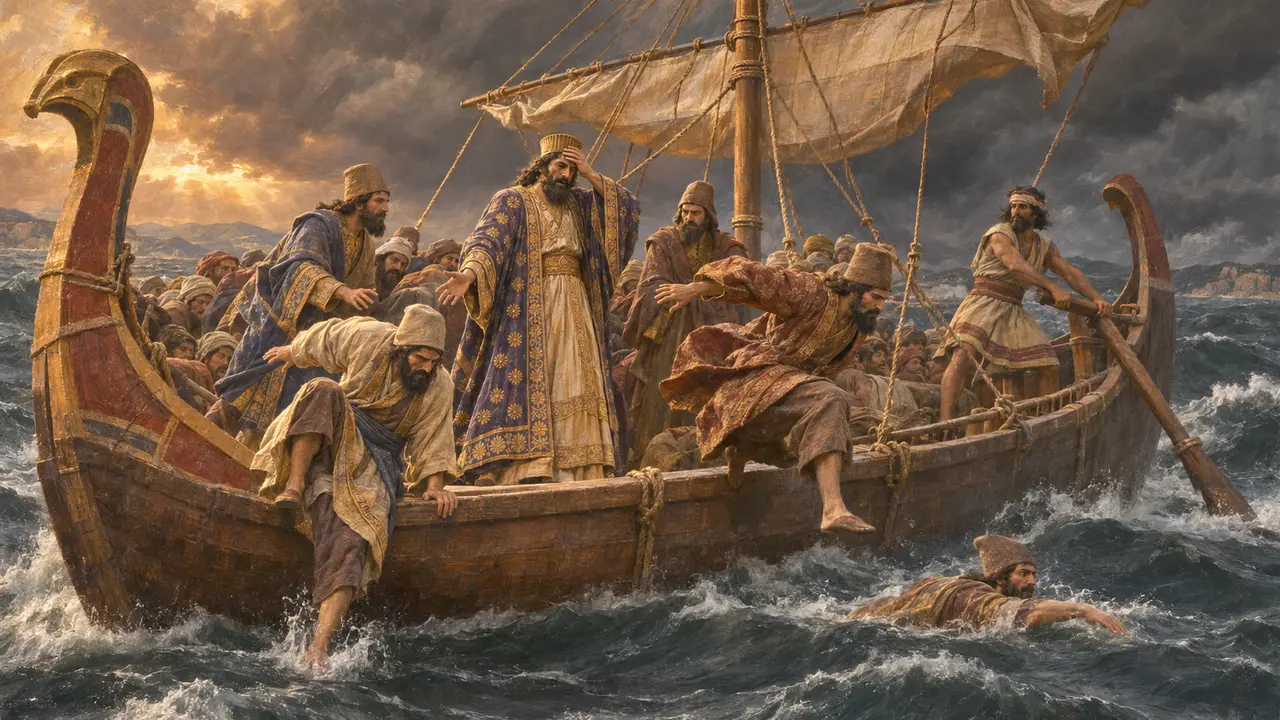
The overloaded ship from Eion
Later legendHerodotus reports a story that Xerxes sailed home from Eion on a Phoenician ship and met a storm. When the helmsman said the ship was too heavy, Persian courtiers leapt into the sea to save the King. Xerxes then rewarded the helmsman with a gold crown and beheaded him for the Persian lives lost. Herodotus says he does not believe it and that Xerxes went home by land.
Herodotus 8.118-120
Sources
- Herodotus, Histories 3.19; 7.23-34; 7.89-100; 8.90; 8.118-120
- Thucydides 1.13
- B. Porten and A. Yardeni, Textbook of Aramaic Documents from Ancient Egypt, vol. 3, 1993 (TAD C3.7)
- H. T. Wallinga, Ships and Sea-Power before the Great Persian War, 1993
- J. S. Morrison, J. F. Coates and N. B. Rankov, The Athenian Trireme, 2000
- P. Briant, From Cyrus to Alexander, 2002